Doubting

In the Gospels of Matthew, Mark and Luke, the disciple known as Thomas is nothing but a name in a list. But in John’s Gospel, we get to see his personality and we discover that although he is a faithful disciple, committed to Jesus, he seems to mostly expect things to turn out badly. Once, when Jesus tells his disciples that he is going to raise Lazarus from the dead in a village near Jerusalem, Thomas responds by telling the other disciples, “Let us also go, that we may die with him.” (John 11:16)

Thus, his reaction to Jesus’ resurrection is not so surprising. When the other disciples tell him that they’ve seen Jesus, Thomas refuses to believe them and announces that unless he can see the nail marks in his hands, and then actually put his fingers there and in the spear wound in his side, he’s not going to believe them. The astronomer Carl Sagan commented that “extraordinary claims require extraordinary evidence.” Thomas would obviously agree with Carl Sagan.

Despite all the people he knew telling him that Jesus was no longer dead, Thomas was not willing to believe it–even though he’d seen Jesus raise Lazarus from the dead. After all, Thomas had, in fact witnessed Lazarus hopping from a tomb. He’d seen it with his own eyes. But he hadn’t actually gazed upon Lazarus’ rotting carcass. He’d only seen a stone moved from a tomb entrance and watched a man in grave wrappings stumble out of the darkness. So perhaps Thomas hadn’t been certain that Lazarus was, in fact, really dead before his appearance.

In contrast to that, he knew for a fact that Jesus was dead. He’d seen him die. And since he hadn’t seen any people he knew without question were really dead ever come back from that state, he wasn’t going to believe it now just because a bunch of people he’d known for only the last three years or so told him so. His doubt was, in fact, quite rational, at least from his perspective.

So. A week passed. Thomas was with the other disciples inside the same locked room when Jesus suddenly appeared.

Jesus turned to Thomas and said, “Put your finger here; see my hands. Reach out your hand and put it into my side. Stop doubting and believe.” (John 20:27)

John’s Gospel does not tell us whether Thomas reached out and touched Jesus; all we get is Thomas’ verbal reaction: “My Lord and my God!” followed by Jesus’ telling him, “Because you have seen me, you have believed; blessed are those who have not seen and yet have believed.” John concludes his Gospel with the comment that, “Jesus did many other miraculous signs in the presence of his disciples, which are not recorded in this book. But these are written that you may believe that Jesus is the Christ, the Son of God, and that by believing you may have life in his name.” (John 21:25)

Of the disciples, John is my favorite, but Thomas is the one I most resemble.

Send to Kindle
Posted in Bible, Religion, Theology | Leave a comment

Think You Can Do It?

After the feeding of the five thousand, Jesus sent his disciples ahead of him in a boat, telling them to cross to the other side of the Sea of Galilee. The wind and waves were against them and they made slow progress. Not long before dawn, the disciples looked up and saw Jesus walking along on the water of the lake. He was coming toward them. Terrified, they imagined they were seeing a ghost. After Jesus identified himself to them, Peter wasn’t convinced and told Jesus, “If it’s you, tell me to come to you on the water.”

So, Jesus told him to come on out. Remarkably, Peter climbed out of the boat and began walking across the water toward Jesus. Part of the way there, Peter noticed where he was and what he was doing and panicked–sort of like the coyote in the cartoon who runs off the cliff but doesn’t start falling until he notices he’s standing on nothing. So Peter began sinking. He yelled for Jesus to save him, and Jesus promptly did–and hauled him back into the boat. Jesus climbed aboard too, and asked Peter, “You of little faith. Why did you doubt?” That story comes from Matthew 14:25-33.

Some are quick to criticize Peter’s lack of faith. They apparently fail to notice something significant: the fact that, for a little while, Peter actually walked on water. So far as we know, no other ordinary human being has ever managed to do that.

Notice something else: the shortness of Peter’s jaunt upon the lake is described by Jesus as indicating “little faith” not “no faith.”

When combined with Jesus’ words elsewhere about faith the size of a mustard seed being able to move mountains, a clear lesson becomes obvious: the smallest bit of this faith stuff is pretty darn strong. I’ve never walked on water. Of course, I’ve never had Jesus standing there telling me, “come on in, the water’s fine” either. Faith isn’t a warm feeling, or hoping it will somehow be okay. It’s hearing God tell you to do something–and then doing it—even as you still harbor some doubt that it is possible. The doing is an important part of faith, because faith isn’t just a feeling, it is action.

There’s an old story about a tightrope walker who set a line across Niagra Falls and then proceeded to walk back and forth across it, to the applause of hundreds of onlookers. Then he took a wheelbarrow and pushed it back and forth, to even more applause. Finally he addressed the crowd and asked them if they believed that if someone climbed in the wheelbarrow, would he be able to push that person safely back and forth across the expanse? The crowd shouted its affirmation.

Then he asked for a volunteer.

No one stepped forward.

As James so eloquently put it, “faith without works, is dead.”

If you really have faith, you can act on it. That no one was willing to get in the wheelbarrow demonstrated that they didn’t have even a little faith. In fact, all they had were doubts.

God doesn’t ask us to have no doubts. He doesn’t ask us to have a mountain’s worth of faith. He just asks us for a little faith. Tiny. Like a mustard seed.

Send to Kindle
Posted in Bible, Religion, Theology | Leave a comment

The Debate

And another of my science fiction short stories is now available for the Kindle. I figure I’ll get all the interesting ones up that I’ve either already seen published or that have already made the rounds without success. Those short stories that I’m still circulating among the magazines I’ll hold off on turning into ebooks for now.

The story I put up today is called The Debate. The story’s description is as follows:

David Long was a time traveling graduate student doing research in the thirteenth century. He wanted Father Hockmeyer, who was dying from the Black Plague, to understand how his personal suffering would, in the long run, benefit humanity and human civilization. Father Hockmeyer wasn’t buying it.

The story approaches the question of human suffering and its point, and then kicks it in the shins. It is a very short story, about the same length as Timewinder, I believe or maybe slightly less.

If you’d like to get it, click here.

Remember, all my ebooks can be borrowed for free if you’re an Amazon Prime member.

Send to Kindle
Posted in Science Fiction, Writing | Leave a comment

Harold, the Angel, Sings

Harold, the Angel, SingsTonight, a children’s story that my wife, Ruth W. Nettelhorst, wrote has been uploaded to Amazon for the Kindle. It is entitled Harold, the Angel, Sings. What’s it about? Sometimes when we are small, we do not feel important and want to do big, important things. A play on the words in the title of the Christmas hymn, “Hark, the Herald Angels Sing”, Harold is a small angel who wants to do great things. He learns about God’s unconditional love, mercy, and grace. And best of all, he is witness to the greatest event in human history.

Once Ruth’s ebook becomes available on Amazon for the Kindle–which should be sometime Tuesday morning (December 11)–I will update this post with a link to the book.

UPDATE:

Harold the Angel Sings is now available on the Kindle! Get it HERE.

If you don’t have a Kindle, remember that you can download the Kindle app onto your iPhone, iPad, iPod Touch, or any Android device (smart phone or tablet). Additionally, you can download an app for your PC or Mac and read on your computer. And the Kindle app, on whatever platform you have, is entirely free. Plus, everything you download on one of your devices will appear on all the others–and it even will sync to the page you’re on. For instance, if you were reading a story on your phone, then when you got home you shifted to your tablet, you’d find your tablet on the exact same page that your phone was on.

For details on the Free Kindle App for your device, visit Amazon’s Free Reading App Page.

Send to Kindle
Posted in Uncategorized | Leave a comment

The Economics of Indie Publishing

One of the interesting things about indie publishing through Amazon.com is that Amazon lets authors keep anywhere from 35 to 70 percent of the cover price of the books they sell; this contrasts with what a traditional publisher would pay, which, if you’re lucky, may be as much as 10 or 15 percent–paid quarterly and sometimes less frequently than that. Amazon, on the other hand, pays monthly. And of course, getting royalties from a traditionally published book occurs only if you sell out the print run, for which you’ve already been paid an advance against those royalties. So, if you don’t sell out, that advance is all you’ll get. And a traditional publisher will normally keep your book in print only for a limited time. With a book you publish for the Kindle through Amazon, your book will stay available for as long as you keep it there.

If you have unpublished books, they are not making you any money. They’re just sitting on your hard drive. If you put them up as ebooks, then you have some chance of generating income. The only question then is how many copies will sell.

My hope is that what I put up there will sell at least as well as my traditionally published books. Or even half as well. Or even a tenth as well.

For instance, according to Bookscan, between 70 and 100 copies of The Bible’s Most Fascinating People sells each week; that’s not counting whatever sales there may be of the book in the other 13 languages it is available in, ranging from Japanese to German to Russian.

At seventy per cent of the cover price, even a book a day average would add up pretty quick–especially given the number of books I intend to put up. That will happen as I finish the formatting and proofreading of them all. At the moment, only three of my short stories are up. More stuff is coming. Soon.

To get a more complete take on this, see Sarah A. Hoyt’s post on Sunday, Making Money From indie Publishing: A Guide For the Hopeful, the Optimistic and the Doomed. She goes into just how much you can make at taking this route.

Send to Kindle
Posted in Writing | Leave a comment

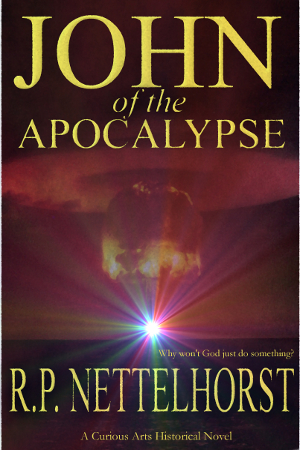
Cover Concepts for Five Novels

Three of my old short stories are now available for the Kindle (see previous posts for information about Timewinder, Not in My Backyard, and Shades of Darkling Nights and Other Colorful Metaphors).

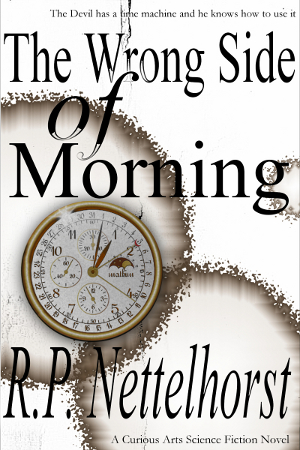
So what am I up to now? I’m doing heavy proofreading of five of my essentially unpublished science fiction novels, Antediluvian, Inheritance, Somewhere Obscurely, The Wrong Side of Morning, and John of the Apocalypse. My plan is to indie publish them in that order as Kindle e-books (See Sarah A. Hoyt, So You Want to Go Indie, for the concept of “indie publishing.” She encouraged me to try this experiment). Antediluvian, Inheritance and Somewhere Obscurely–(titled as Somewhen Obscurely), were published by a small press publisher that never paid me a cent and has since stopped publishing new work; of course, part of the reason they essentially went out of business is that one of the owners/editors, Leo Frankowski, died.

Antediluvian

The Solar Union and the Outworld Federation had been at peace for hundreds of years, but that time was ending. Methuselah, grandfather to Noah, was leading the Solar Union headlong toward war. When it came, civilization would fall. Powerless to stop the coming deluge, Noah risked everything to survive.

Inheritance

An old geneticist, Paul Wilcox, becomes involved with a fifty-thousand year old archeological site that will radically change the world’s understanding of its past, with implications that will change its future. The ancient site is filled with advanced, human-built technology, and an artificial intelligence that has been waiting a very long time for someone to talk to.

Somewhere Obscurely

Mohado — vulgar term applied to timeslipped workers. Living as virtual slaves, these desparate workers move back and forth through time at the whims of their employers. This is Aramond Smith O’Reilly’s life. Witness to his mother’s murder, kidnapped, and sold into a life of misery… He will never know where – or when – he will be. After escaping wretched conditions, Aramond rises above his situation. Purchasing a timeship, he becomes the very thing mohados dread and fear: a coyote–one of those who transports and delivers the workers to those who would exploit them.

The Wrong Side of Morning

The Devil has a time machine and he knows how to use it.

Calling himself Harlequin, he is desperate to keep God from locking him away in Hell forever. He suspects that if he can make the right change in history, he’ll manage to escape God’s judgment. So he keeps trying, over and over again, to make changes in the past, present and future. Laurel Lapere, a historian from the 23rd century who watches history unfold through a time portal, notices an anomalous event and discovers that it focuses on a late twentieth century accountant named Keaton. She travels back in time to meet him, and together they soon discover Harlequin’s plan and try to thwart him. At the same time, Harlequin tries to use them to his own advantage.

John of the Apocalypse

“Why doesn’t God do something?” It was a question heavy on John’s mind. He had seen all his companions bleed and die; thousands of his compatriots had been slaughtered by a brutal tyranny. It seemed such an odd way for God to treat his most faithful servants. By 93 AD, John was just a lonely old man exiled for his beliefs on the island of Patmos. And then Jesus unexpectedly shows up with good news and an explanation.

* * *

The book descriptions are in a very preliminary stage; they are very much works in progress. Writing a good book description is almost harder than writing the novel itself. If you happen to have any constructive criticism on either the book cover designs (also preliminary) or the book descriptions, that would be very helpful.

After that, I’m intending to indie publish a six part series of novels, The Chronicles of Tableland. I’ve written all six of the books, but I’ve only settled on titles for the first two. So here are the titles and the book descriptions for those two. I have no cover designs as yet. And I still need to do a lot of proofreading on them:

The Chronicles of Tableland 1: All His Crooked Ways

In an alternate reality, the Egyptian Empire and its pharaohs have ruled Tableland and its assorted nations and peoples for thousands of years. It is a flat world bounded by oceans that extend for light-years in every direction. A young boy, Matthew, is sold into slavery after his parents are murdered. All hope seems lost. But when Longren, a lonely hermaphrodite from another alternate universe rescues him from his enslavement, Mathew’s despair turns to hope. Longren and his companions—a centuries old conundrum named Flet, with Samantha, a much younger doctor mourning a lost love—are hunting for the secret to immortality. They invite Matthew to join their quest.

The Chronicles of Tableland 2: Twister

Matthew, Longren, Flet and Samantha journey by land and river across Tableland in search of freedom, love and immortality. Instead, they find slavery, misogyny, and brutality. They also run into Matthew’s old master once again, who is even more evil than they knew. It turns out he’s a twister, a demon who enjoys torturing and killing his wives. He uses services provided by the Aztecs. Not only have the Aztecs endured and prospered, they still practice human sacrifice.

I’ll keep everyone updated on when each of these novels (and others) become available for the Kindle, and how this experiment in indie publishing is going.

Send to Kindle
Posted in Science Fiction, Writing | Leave a comment

More Short Stories for the Kindle

Two more of my short stories have joined Timewinder on the Kindle.

Not in My Backyard is a short story that was originally published in Of Unicorns and Space Stations, #3 in 1993. It’s a time travel story. Holt Bloom looked like an ordinary salesman when he visited the office of a professor at Harvard University one afternoon in 1935. What he had to sell, however, was far from ordinary: a notebook computer from the 21st century.

The other story is Shades of Darkling Nights and Other Colorful Metaphors. It was published in Plot Magazine, in the Spring 1995 issue. Before it landed there I had submitted it to Marion Zimmer Bradley’s Fantasy Magazine. Marion Zimmer Bradley herself wrote me a very nice rejection letter, commenting that the title was the best one she’d seen all that year. She said it almost made her buy it. Almost. Ah well, Plot Magazine snapped it up and paid me the princely sum of ten dollars for it. Now it’s available on the Kindle for $2.99, or if you have Amazon Prime, you can borrow it for a month for free.

Shades of Darkling Nights and Other Colorful Metaphors tells the tale of Maurice Bolder, who was a writer living a quiet, ordinary life. Until he was sued by the ghosts and other creatures of the night for pain and suffering caused by leaving his electric lights on all the time.

If you’d like to purchase or borrow either or both short stories, just click on the story titles above. Or go to Amazon.com and just type in my last name. That’ll also show you my published books. They’d make delightful Christmas gifts.

Send to Kindle
Posted in Uncategorized | Leave a comment

Back to the Moon With Golden Spike Company

Source SPACE.com: All about our solar system, outer space and exploration

Send to Kindle
Posted in Science, Space, Technology | Leave a comment

He Who Dies With the Most Toys…

As Jesus was speaking to a crowd one day, someone in the crowd inexplicably asked Jesus, “Teacher, tell my brother to divide the inheritance with me.”

Jesus reacted by telling him, “Man, who appointed me a judge or an arbiter between you?” Then he added, “Watch out! Be on your guard against all kinds of greed; a man’s life does not consist in the abundance of his possessions.” (Luke 12:15)

Jesus spoke against the bumper sticker philosophy, “he who dies with the most toys, wins.” We not only are more than our possessions, we are something other than our possessions.

Jesus went on to illustrate his point with a short parable. He told about a rich man who produced a good crop, realized he had no place to put it, and decided to tear down his barns and build bigger ones to hold it all. The man thought to himself, “You have plenty of good things laid up for many years. Take life easy; eat, drink and be merry.” (Luke 12:19)

But before he could accomplish any of his plans, he died.

Jesus explained, “This is how it will be with anyone who stores up things for himself but is not rich toward God.” (Luke 12:21). Jesus added that there was no need to worry about making sure you have enough stuff to eat and wear. God knows your needs. After all, the birds and flowers don’t sow or reap, and yet they survive well thanks to God. How much more human beings who do sow and reap. God will take care of you, too. Relax and stop worrying. Seek God’s kingdom first, instead. (Luke 12:22-34)

What really matters in life? What is it all about? Will bigger barns and more leisure time really matter when you die? Twenty years after your grave is filled with what’s left of you, what will really matter? Certainly not your toys.

Send to Kindle
Posted in Bible, Religion, Theology | Leave a comment

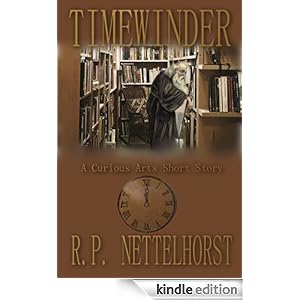
Timewinder Finally Available


Timewinder is now available as an ebook from Amazon.

So, Timewinder is now available on Amazon. It was not as easy to get it there as I had anticipated; the actual conversion from Microsoft Word to a format that Amazon likes was not difficult and the proofreading and trying to make sure there are no typos (which, I suppose, as soon as someone gets it they’ll find everything I missed and joyfully let me know). Also, putting up all the information that Amazon wanted was not onerous. What was an unexpected struggle was getting them to believe that it was mine, that I had a right to publish it, and that it wasn’t floating around the web for free (the only place it ever appeared–outside of its original publication in a small press magazine, Vision Science Fiction–in 1993, was when I briefly put the story up on this blog—and I subsequently deleted all but the first two paragraphs so I wouldn’t violate Amazon’s requirements). What should have been a twelve hour process, from the time I uploaded it to their servers until it was available for purchase turned into a forty-eight hour marathon with multiple emails back and forth. Sigh.

At least it’s done and up. I’m hopeful that the 30 or so other books and such that I intend to “indie publish” won’t be quite as stressful. I don’t mind proofreading and formatting and such (well, okay, it’s not my favorite thing) but I dislike hopping through hoops. On the other hand, making things available for sale that otherwise would simply be sitting on my hard drive makes all the frustration worthwhile.

Send to Kindle
Posted in Science Fiction, Writing | Leave a comment