
Then the high priest stood up before them all and questioned Jesus, “Don’t You have an answer to what these men are testifying against You?”But He kept silent and did not answer anything. Again the high priest questioned Him, “Are You the Messiah, the Son of the Blessed One?”
“I am,” said Jesus, “and all of you will see the Son of Man seated at the right hand of the Power and coming with the clouds of heaven.”
Then the high priest tore his robes and said, “Why do we still need witnesses? You have heard the blasphemy! What is your decision?”
And they all condemned Him to be deserving of death. Then some began to spit on Him, to blindfold Him, and to beat Him, saying, “Prophesy!” Even the temple police took Him and slapped Him. (Mark 14:59-65)
Jesus sometimes spoke most profoundly when he said nothing. During his trial, people lied about what Jesus said and what he did. Jesus did not respond to any of their false accusations. He kept his mouth shut. How come? What did his silence mean?
His lack of response was in keeping with the principle of turning the other cheek and not resisting an evil person. Therefore, Jesus’ silence matched his words. And there were prophesies about the Messiah keeping silent in the face of false accusations. So Jesus’ spoke only to acknowledge the truth: that he was the Messiah. He never spoke to resist a lie.
The idea of the Messiah as the Son of God was nothing out of the ordinary among the Jews. Nor was the Messiah’s close association with God, as God’s right hand, coming in the clouds a new concept. So why did the High Priest react by accusing Jesus of blasphemy?
Because the high priest did not agree that Jesus was the Messiah. He believed Jesus was empowered by Satan. The charge of blasphemy was dependent upon their rejection of Jesus’ claim as spurious. There was no objective proof against Jesus, only their subjective wish that it were so. Their confidence in the rightness of their position led them to abuse Jesus and to sarcastically demand that he “prophesy.”
Jesus went back to being silent, refusing to respond to his mistreatment or the additional lies of his enemies.
Jesus knew there was a time to speak, and a time to be silent. He did not mix-up those times.
 Send to Kindle
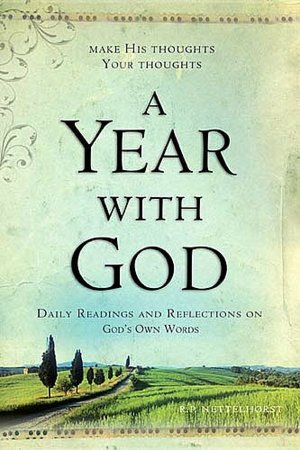 A Year With God
 A Year With Jesus
 The Bible's Most Fascinating People
 The Bible: A Reader's Guide
 Antediluvian
 Inheritance
 John of the Apocalypse
 Somewhere Obscurely
 The Wrong Side of Morning

