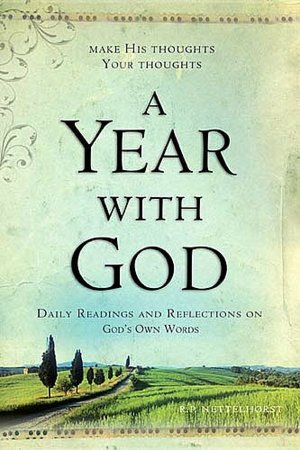
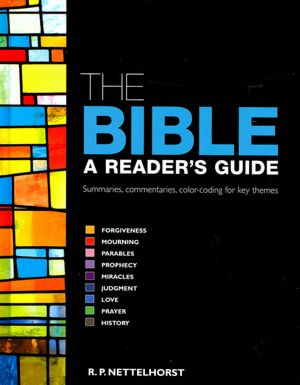
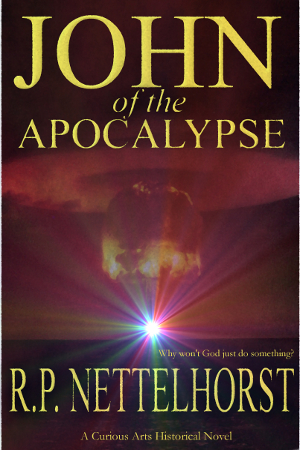
Book Making

The author of Ecclesiastes, traditionally thought to be Solomon, when commenting on the overall futility of existence wrote, “of the making of many books, there is no end.” (Ecclesiastes 12:12) He saw the abundance of books as a further illustration of futility: one can never read all the books that one would care to read, and no matter the number of books written, there are always more questions to answer and stories to tell.

As an author, I find myself overwhelmed by the number of books I am currently working on, as well as those that are hopping up and down in my head demanding to be written, like excited third graders in my wife’s classroom, shouting “pick me, pick me” upon being told that one of them will get a Popsicle.

I have two books that are substantially done and are in the hands of my first readers—only one of whom has reported back to me, and then on only one of the two books. I’ve incorporated the recommended changes and found a few other bits and here and there that needed adjustment that I noticed in correcting the flaws my reader found. But I have two other novels, one science fiction, one historical fiction, that are in need of some serious rewriting before I’ll allow my first readers to gaze upon them.

On top of that, I’ve got books that I’m processing for publication as e-books, which require proofreading and formatting before they’ll be ready, not to mention the designing of the covers. So far I’ve made fifteen books available for purchase as e-books on Amazon. Currently, I’m averaging about one book sold per day, which works out to about a hundred fifty dollars per month. Not a huge amount, admittedly, but more money than they were generating sitting on my hard drive. And, theoretically at least, the numbers are supposed to go up as time goes on—if those who encouraged me to do this are right. Based on their experiences and the experiences of the many, many other authors that they know who have done this, my books appear to be falling into the predicted pattern, given the number that I now have available on Amazon: 15 e-books.

So far I’ve allowed three of the books to go on promotion as free downloads, each for about two or three days at a time. The number that went for free ranged from a high of 440 to a low of 95; one book ended up number one for “sales” on Amazon during those two days—though in an obscure subcategory. I don’t get any royalties for the books when they are going for free; but it seems an inexpensive method of advertising, since it doesn’t cost me anything out of pocket. So far, the experiment in indie publishing seems to be working.

Consequently, from Solomon’s perspective, I’m certainly guilty of “the making of many books.” But I also think about his words from the standpoint of a reader. In my

Send to Kindle
Posted in Writing | Leave a comment

Questions

This posting is mostly just me rambling tonight; the structure is poor. I am one of those annoying sorts of people who is rarely wholly satisfied with an answer–since most answers don’t really take care of all the questions I have. All too often, I see problems and I don’t find good answers. Telling me simply, “well, that’s the way it is” ain’t enough. Nor do I take kindly to being told to just sit down and shut up and stop wondering about stuff that no one should be wondering about. We already know the answer, so just accept it. I am not one to be told: “see that fenced off area? You can go in there, but don’t touch anything; most certainly you are not allowed to move any of the patio furniture, and don’t ask about the recipe for the potato salad.”

Frankly, when it comes to pursuit of the truth, I don’t think anything should be off limits.

Admittedly, for many, theology is merely a matter of learning rote doctrine. All too often it is simply a set of beliefs clung to without thought or wondering. And you’re certain to get in trouble with some people if you ask too many questions or challenge any of the sacred cows. A certain institution that I taught at briefly viewed theology as a list that the students were expected to memorize. Asking hard questions, or really, any questions at all, or offering alternative viewpoints, or leaving some questions as unanswerable was simply not acceptable. At all.

If you doubt anything that “everyone” has “always” believed, then you are a heretic for sure. The thing is, in science, in engineering, in most disciplines, asking questions, doubting pat answers, focusing on the problem areas and picking at the loose threads is, at least, theoretically praiseworthy. Of course, in real life, challenging pet dogmas in any realm of human knowledge can cause problems.

This is not to say that all questions are necessarily equally worthwhile or reasonable. If you question the spherical nature of the Earth, or cast doubt on well documented historical events, or posit insane conspiracy theories, you can expect to have the weight of more knowledgeable people descending on your stupidity. Your questions must be knowledgeable and face the actual data. Of course, if you’re seven and you wonder about how the earth can be round, that’s not quite the same as if you’re thirty.

And so, I get myself into trouble sometimes over the things I ponder.

For instance, I have a lot of questions regarding this thing called Hell. I know a great number of Christians who have no questions at all about it and are quite happy with the concept. I know a few who seem rather gleeful about it–which I find a bit disturbing, to be honest.

And so, here are my questions–questions that I believe need to be faced regardless of where you finally end up in your concept of Hell. Some of these questions are more easily answered than others, of course:

If salvation is by grace, and if Jesus died for the sins of all, then why are not all then saved? Is atonement limited to only those who are elect? What about the status of those who never hear, or cannot hear (those who die in infancy or before, the mentally handicapped, and so on)?

So, is it possible that the purpose of spreading the gospel, and getting people “saved” is not to rescue them from eternal Hell, but to rescue them from the “hell” of a life not lived in freedom from the burden of guilt and the law? Isn’t it enough to bring enlightenment and joy? The gospel after all is considered “good news.” How good is it if the message, as commonly proclaimed throughout history, is “believe or go to Hell forever?” And come to think of it, where in the Bible do we see anyone preaching like that?

When Jesus says that he is the way, the truth, and the life, is he describing what he has done, or demanding a prescriptive act on our part? If the latter, how is that consistent with the notion of grace? But then why the call to repent, to believe, and the importance of faith in all of this? What about the clearly expressed “judgment of God” both in times past, in a temporal sense and the seeming more significant “cosmic” and eternal sense that is apparently indicated by several passages?

How do we put all this together and make sense of it? If salvation is universal does this mean that truth is relative and you can and should believe any fool thing you want, do anything you want, because in the final analysis it doesn’t matter what you do, think, say or believe, in the end you’ll get to go to heaven? If knowing the truth matters only if it keeps us from hellfire, then what’s the point of all the schools that we have to educate young people? Why bother? Do we correct stupid notions, fight ignorance and insist on accuracy only because it benefits us in the afterlife?

Another problem with the traditional notion of Hell: if Hell is as we have generally believed it, then why is there no fire and brimstone preaching in the Bible? Why did God wait until the NT to let people know about the danger? Are we to assume that in OT times people willy-nilly went to Hell in huge numbers, but in God’s progressive rollout of information about himself and his ways, he didn’t think that was important enough to bother mentioning to anyone until about 2000 years ago?

Does this make any sort of sense at all? Does it work with our notions of God being loving? I may not be able to explain clearly to my two year old about the dangers of playing in the street, but he sure as hell gets warned about it really quick.

Certainly on the face of it, there are several New Testament passages that seem to best fit a more traditional notion of Hell. My question is: are we reading these things correctly? Or is there another way of looking at it? And so this is the source of my puzzlement on the whole issue of Hell. The Bible seems to me clear in indicating the reality of Hell; but reconciling all these questions, making sense of the whole thing–that’s a bit more difficult. So if there is a Hell, what really is it like? What is it’s purpose? How does it work? Given that discipline in the Bible is generally redemptive in purpose, are we certain Hell is merely and only punitive?

I think it is important to realize something here. Theology is mostly about asking questions. It’s not mostly about dogma. As the preceding paragraphs illustrate (I hope): we know much less than we think we do, and things are not always as easy as we may at first think them to be. And I think it would be good, especially at the academic level, that people be able to discuss questions such as this without being afraid that they are going to have rocks tossed at them, or that they will be chased out of town on a rail and denounced as a heretic. Academic freedom should mean something even for those who happen to be theologians. We should be able to travel anywhere in the pursuit of truth, without worrying about getting in trouble.

If you believe something only because someone told you to believe it or else, do you really believe it at all? Shouldn’t we know why we believe what we believe? Shouldn’t you be able to wonder?

Send to Kindle
Posted in Bible, Religion, Theology | Leave a comment

Kibbutz Massada in 1977

During the summers (mid June-mid August) of 1976 and 1977 I was a volunteer worker on Kibbutz Massada. This video was made the second year I was on the kibbutz, but I’m guessing at least a month or two after I had left since they are harvesting the bananas. When I worked in the bananas it was before they were ready to be harvested. I remember setting out poles to help prop up the trees and trimming the leaves with a curved knife. Toward the end of the video, when you see people putting blankets on the grass in front of some long house-like looking buildings, those were the places where the volunteers lived. I was in the building on the left, if I recall correctly.

When I was on the Kibbutz, besides working in the bananas, I also got to work with chickens (from about 1:30 AM until around 8:00 or so, if I remember right), the olive trees, the alfalfa, and the date palms. Normal working hours were from about 4:00 AM until noon, with a break at 8 for breakfast. We stopped work for the day at about noon. After that it was so hot that no one did much of anything; typically it was above 104 by 10 AM. We ate hard cookies and drank strong coffee in clear, handle-less Pyrex cups at 4:00, before we went to work. Breakfast and lunch were in a communal dining hall; the meals were mostly the same, every day, morning, noon and night: hard bread, plain yogurt, boiled eggs, lettuce and tomatoes, olive oil, date jam (with the huge seeds in the jam that you had to pick out. Water, tea or coffee to drink. Sometimes at lunch or supper there was chicken and once in awhile we had pasta noodles and chocolate sauce. I do not know why they liked that. They had a place behind the cafeteria where you could fill water jugs with either plain water or carbonated water. There was a store on the kibbutz where we could buy things like Coke, ice cream and bubble gum: the Bazuka Joe comics were in Hebrew and just as dumb as they are in English.

We worked six days a week, with Saturday’s off, when we would take trips around the country. Kibbutz Massada is located in the Jordan Valley, just south of the Sea of Galilee on the Yarmuk River. We were right on the border with Jordan; I remember working in the date palms, up in the top of the palms tying the bunches of dates to the leaves so they wouldn’t fall off before they were ripe. I could see the barbed wire, the warning track, and the minefield; beyond that was the Yarmuk river. One day a wild bore hit one of the mines. Pigs can fly in that case.

This video brought back a lot of memories.

Send to Kindle
Posted in Uncategorized | Leave a comment

You Have It All

The author of 2 Peter writes at the very start of his epistle:

His divine power has given us everything we need for life and godliness through our knowledge of him who called us by his own glory and goodness. Through these he has given us his very great and precious promises, so that through them you may participate in the divine nature and escape the corruption in the world caused by evil desires.

For this very reason, make every effort to add to your faith goodness; and to goodness, knowledge; and to knowledge, self-control; and to self-control, perseverance; and to perseverance, godliness; and to godliness, brotherly kindness; and to brotherly kindness, love. For if you possess these qualities in increasing measure, they will keep you from being ineffective and unproductive in your knowledge of our Lord Jesus Christ. But if anyone does not have them, he is nearsighted and blind, and has forgotten that he has been cleansed from his past sins.

Therefore, my brothers, be all the more eager to make your calling and election sure. For if you do these things, you will never fall, and you will receive a rich welcome into the eternal kingdom of our Lord and Savior Jesus Christ. (2 Peter 1:3-11; emphasis added)

Peter reminds his readers that God has given them everything they need for life and godliness (vs. 3). This cannot be overemphasized. We already have everything we need. There is nothing else to find, nothing to add, nothing to build. There is no mystery waiting to be solved before you can live a powerful Christian life. No door to be unlocked. No secret handshake. No special prayer, no special diet. Nothing at all: because God has done it all for you already.

Remember, Jesus paid everything on the cross. You’ve got nothing else to buy. You don’t owe a thing. Even the tip is covered. There’s nothing left that you need to do. You don’t even need to wash the dishes. You don’t contribute to your salvation in anyway and nothing you do can add to your tab. Recall what Paul wrote in his letter to the Romans:

Therefore, since we have been justified through faith, we have peace with God through our Lord Jesus Christ, through whom we have gained access by faith into this grace in which we now stand. And we boast in the hope of the glory of God. Not only so, but we also glory in our sufferings, because we know that suffering produces perseverance; perseverance, character; and character, hope. And hope does not put us to shame, because God’s love has been poured out into our hearts through the Holy Spirit, who has been given to us.

You see, at just the right time, when we were still powerless, Christ died for the ungodly. Very rarely will anyone die for a righteous person, though for a good person someone might possibly dare to die. But God demonstrates his own love for us in this: While we were still sinners, Christ died for us.

Since we have now been justified by his blood, how much more shall we be saved from God’s wrath through him! For if, while we were God’s enemies, we were reconciled to him through the death of his Son, how much more, having been reconciled, shall we be saved through his life! Not only is this so, but we also boast in God through our Lord Jesus Christ, through whom we have now received reconciliation. (Romans 5:1-11)

And yet Peter speaks of growth. How does that work? Perhaps an analogy might be useful. Imagine that a friend has given you a fully equipped and crewed airport, a Boeing 747, a stack of instruction manuals, unlimited jet fuel, and flying lessons. You now have everything you need to fly anywhere in the world. But it might take you awhile to figure out how to do it. That’s what it is like to be a Christian. You have everything you need, the Holy Spirit is indwelling you and is your constant companion. And yet you have the potential for growth. How does that work?

Spiritual growth is NOT a matter of memorizing rules and filling in boxes. Spiritual growth will NOT lead to health and wealth and happiness.

There are no shortcuts. There is no magic elixir. You’ll still get flat tires, the flu, and your kids will probably mouth off to you now and then. The path to maturity is long and arduous (Matthew 7:13-14), requiring a lifetime of trials. And again: you’ve got everything you need already. God’s Holy Spirit lives inside of you. Think of the implications. How can you have God inside of you without that having a rather profound impact on how you live? It is heretical to imagine that you need some person to lead you to a right relationship with God. You already have a right relationship with God! Remember: Jesus already paid the ultimate penalty. Paid it in full. No book or speaker, no pastor or teacher, can take the place of God in your life. Each of us must relate to God individually, and each one of us will grow whether we have some human being guiding us or not. As the Apostle John wrote: “you do not need anyone to teach you.” (1 John 2:27)

In a biological sense, growth is spontaneous and inevitable; without it, death just as inevitably results. The writers of scripture did not lightly choose the word “growth” for describing the process of the Christian life. For instance:

He also said, “This is what the kingdom of God is like. A man scatters seed on the ground. Night and day, whether he sleeps or gets up, the seed sprouts and grows, though he does not know how. All by itself the soil produces grain—first the stalk, then the head, then the full kernel in the head. As soon as the grain is ripe he puts the sickle to it, because the harvest has come.

Again he said, “What shall we say the kingdom of God is like, or what parable shall we use to describe it? It is like a mustard seed, which is the smallest seed you plant in the ground. Yet when planted, it grows and becomes the largest of all garden plants, with such big branches that the birds of the air can perch in its shade.” (Mark 4:26-32; see also 1 Corinthians 3:6-7; 2 Corinthians 10:15; Ephesians 4:15-16; Colossians 1:6-12, 2:19; 2 Thessalonians 1:3; 1 Peter 2:2-3; 2 Peter 2:2-3; 2 Peter 3:18)

So, at the beginning of his letter, Peter lists eight processes that are linked intimately to one another in spiritual growth.

They are:

1. Faith
2. Goodness
3. Wisdom
4. Self-control
5. Perseverance
6. Godliness
7. Brotherly Kindness
8. Love

Sounds remarkably like something Paul wrote:

But the fruit of the Spirit is love, joy, peace, forbearance, kindness, goodness, faithfulness, gentleness and self-control. Against such things there is no law. (Galatians 5:22-23)

Since God the Spirit lives inside of you, you’ve already got all that. Nothing you need to run out and buy. You’ll never run short. So again, never forget:

 This is the covenant I will establish with the people of Israel
after that time, declares the Lord.
I will put my laws in their minds
and write them on their hearts.
I will be their God,
and they will be my people.
No longer will they teach their neighbor,

or say to one another, ‘Know the Lord,’
because they will all know me,
from the least of them to the greatest.
For I will forgive their wickedness
and will remember their sins no more. (Hebrews 8:10-12)

You really, really do have everything you need. Metaphorically, stop hopping about looking for your glasses. They’re right there, on top of your head.

Send to Kindle
Posted in Bible, Religion, Theology | Leave a comment

Culture and the Bible

God is interested in communicating to his people and he chose to do so through literature. And he chose to do it through a specific culture. Sometimes, that culture is very, very alien and hard to comprehend. Consider this peculiar passage from Genesis:

He also said to him, “I am the LORD, who brought you out of Ur of the Chaldeans to give you this land to take possession of it.”

But Abram said, “Sovereign LORD, how can I know that I will gain possession of it?”

So the LORD said to him, “Bring me a heifer, a goat and a ram, each three years old, along with a dove and a young pigeon.”

Abram brought all these to him, cut them in two and arranged the halves opposite each other; the birds, however, he did not cut in half. 11 Then birds of prey came down on the carcasses, but Abram drove them away.

As the sun was setting, Abram fell into a deep sleep, and a thick and dreadful darkness came over him. 13 Then the LORD said to him, “Know for certain that for four hundred years your descendants will be strangers in a country not their own and that they will be enslaved and mistreated there. But I will punish the nation they serve as slaves, and afterward they will come out with great possessions. 15You, however, will go to your ancestors in peace and be buried at a good old age. In the fourth generation your descendants will come back here, for the sin of the Amorites has not yet reached its full measure.”

When the sun had set and darkness had fallen, a smoking firepot with a blazing torch appeared and passed between the pieces. 18 On that day the LORD made a covenant with Abram and said, “To your descendants I give this land, from the Wadi of Egypt to the great river, the Euphrates—19 the land of the Kenites, Kenizzites, Kadmonites, 20 Hittites, Perizzites, Rephaites, 21 Amorites, Canaanites, Girgashites and Jebusites.” (Genesis 15:7-21)

Thus, when Abraham asks in Genesis 15, “how do I know I’ll inherit this land”, God answers his question in a way that makes no sense to modern readers: he tells Abraham to split some animals in half and lay them in parallel rows. Then, God appears as a smoking firepot walking between the animal pieces.

A modern reader will look at this and go “huh?”

But for the original readers living in ancient Israel, it made perfect sense. You see, Abraham had asked for a guarantee, and what God did was sign a contract. Take a look at Jeremiah 34:18-19:

The men who have violated my covenant and have not fulfilled the terms of the covenant they made before me, I will treat like the calf they cut in two and then walked between its pieces. The leaders of Judah and Jerusalem, the court officials, the priests and all the people of the land who walked between the pieces of the calf…

Sometimes the culture shock from reading the Bible hits us square in the face and we’re forced to confront the alien situation. Too often, the way we confront it is to duck and move on–nothing to see here–and just shrug and forget about it. Other times we see a situation in the Bible and we interpret it through the lens of our own culture and thus entirely misunderstand the point. I leave you with just a few things to consider when you read the Bible:

1. Monarchy is pretty much the norm in the Bible, along with tyranies of various sorts. Western democratic ways of governing are completely alien. Don’t make the mistake of thinking that the President of the United States is the equivalent of a monarch or emperor. When the Bible talks about obeying the king, the closest thing in the U.S. that matches that is the Constitution. “We the people” are the actual source of power and governing; our elected representatives are just that: our servants who work for us. We can criticize and fire them if we feel like it.

2. There is no concept of the separation of powers in the Bible. The executive, legislative and judicial branches are usually all embodied in a single individual. For instance, we call Deborah, Samson and Gideon, for example “judges” and speak about the “Book of Judges.” The English word “judge” is actually a poor translation, though now traditional. Instead, think of them as warlords, like the tribal warlords in Afghanistan.

3. Cities of Refuge for those guilty of killing someone to flee to; avenger of blood hunting them down to kill them in vengeance. There is no such thing as police, jails, or juries. Instead, there was blood vengence. Think the Hatfields and the McCoys, or rival gangs. Or the classic line from the movie, Princess Bride: “My name is Inigo Montoya. You killed my father. Prepare to die.”

4. Concepts of marriage and sexual relations are a bit different in the Bible. Polygamy is common and is never prohibited. There are such things as “concubines” which are secondary wives, primarily used for sex. (see Exodus 21). If a man dies childless, his brother or next closest relative was obligated to marry the widow and make babies in order to carry on the dead man’s name.

These are merely a few of the major cultural differences between 21st century America and ancient Israel. Consider: the people in the Old Testament were mostly either farmers or shepherds. Very few modern Americans live or work on farms today. During the time of Saul, we witness Israelite culture transitioning from the Bronze Age to the Iron Age. The Bible predates the industrial revolution by thousands of years. Clocks, the necessity of precision in measurement were all unknown concepts to the people of the Bible. There comprehension of the workings of the universe were very limited. Only after about 600 BC was it common knowledge that the Earth was a sphere. No one knew about electricity. Travel was on foot, by carriage, or on the backs of animals. Communication was slow.

Of course most people reading the Bible today understand these things; but it’s very easy to forget and to impose our modern sensibilities, concepts and values. Additionally, consider that the questions you have, the issues that are vital to you, may not at all be what troubled and concerned the authors of the Bible, or their original audience. In fact, the Bible may not answer your questions at all. The Bible is God’s sufficient revelation to the human race. It is not his complete revelation to it. If you want to know how to fix your car or install a new printer, to pick obvious things, you’ll have to look for the answers elsewhere. Likewise, if you want to know what Jesus looked like, you have to accept the fact that the people at the time didn’t care. They had other questions instead.

Send to Kindle
Posted in Bible, Culture, History, Religion, Theology | Leave a comment

Structure of Biblical Narrative

Admittedly this is a long post, and somewhat technical, but I think it can help you make sense of some parts of the Bible that otherwise might be a bit confusing. One of the mistakes we make all too often is in some of our assumptions, or the things we take for granted. That is, when we hear the word “earth” we picture a blue ball spinning in space. We forget that the authors of the Bible would never have had this image in their heads. Likewise, even such basic concepts as how to tell a story don’t necessarily work the same way in all cultures, anymore than you’d expect the same elements and approach in a play verses a novel, or a short story versus a movie–or even what to expect from a romantic comedy versus a science fiction epic.

So, the authors of the Bible often don’t tell stories like we do. We tend to use the chronology of events to serve as the basic framework holding our tale together. Not so much in the biblical narratives. Chronology is not, in fact, the overriding structural principle in Hebrew writing (and this would include the New Testament as well, because, though written in Greek, it was not primarily composed by Greeks). Rather, chronology is subsumed by what to the ancient Jewish people (and their neighbors in the Near East) were more important principles, at least in Hebrew thought: namely, theme and content.

While chronology is not lacking, it is not the only, most important or overriding sequencer of the material. Rather, other things can become more important, thereby skewing the chronology in unexpected ways. Perhaps this is not so surprising. After all, the very nature of the Hebrew verbal system is suggestive of the possibility; instead of tense, ancient Hebrew (unlike the modern language that is today spoken in Israel) has aspects which describe action in terms of completion or incompletion, rather than in terms of past, present and future. This outlook cannot have avoided having an impact on narrative techniques. Yet, in the teaching of the language, the true nature of the aspect system in Hebrew is commonly obscured. For instance, Menahem Mansoor, in his first year book Biblical Hebrew Step by Step, states:

Strictly speaking, Biblical (i.e. Classical) Hebrew has no tense similar to those used in English, French, or German. The action is regarded as either complete or incomplete. Hence most scholars prefer to call a completed action perfect and an incompleted action imperfect….

The use of the Hebrew tenses is relatively easy to learn….Thus, many different types of past action are expressed by the Hebrew perfect tense. This reductionism is largely true of the Hebrew imperfect tense in expressing various types of future (and sometimes also present) action.

Rather than stressing the peculiarity of the Hebrew verbal system, the attempt is made in most language courses to simply force it into a familiar mode, so that students are invariably left with the impression that the imperfect is present or future and perfect is past tense, with no awareness of the non-chronological character of the verbal system. Rather than adjusting minds to the Hebrew mold, ancient Hebrew is all too often pressed into a Western European mold — thereby obscuring what is actually transpiring in the text.

Hebrew narrative structure contains what can be called a thematic expansion of topic — a format that commonly replaces chronology as an organizational principle even in straightforward narrative. This structuring can be illustrated in various portions of the Bible, both Old and New Testaments, and is especially illuminating when it comes to certain passages that otherwise would be problematical.

Examples:

Jonah 3:5-9

5The Ninevites believed God. They declared a fast, and all of them, from the greatest to the least, put on sackcloth. 6When the news reached the king of Nineveh, he rose from his throne, took off his royal robes, covered himself with sackcloth and sat down in the dust. 7Then he issued a proclamation in Nineveh: “By the decree of the king and his nobles: Do not let any man or beast, herd or flock, taste anything; do not let them eat or drink. 8But let man and beast be covered with sackcloth. Let everyone call urgently on God. Let them give up their evil ways and their violence. 9Who knows? God may yet relent and with compassion turn from his fierce anger so that we will not perish.”

Jonah displays an example of this thematic structuring–a structuring that plays havoc with chronology. Jonah 3:5-9 is a description of Nineveh’s reaction to Jonah’s preaching. 3:5 gives a summary of the response of the city to Jonah’s preaching, while 3:6-9 gives specific details about what happened and how. If an attempt is made to read this as strictly a chronological description of what occurred, a certain confusion results. Verse five recounts how the people repented and wore sack cloth. If verses 6-9 follow chronologically, then why does the king order his people to do what they’ve already done?

However, if the thematic arrangement is recognized, the problems evaporate, and the narrative is perfectly clear and consistent. Look at the pattern:

  A The Ninevites believed God (3:5a)
      B They declared a fast (3:5b)
         C They put on sackcloth, from the greatest to the least (3:5c)
         C’ King puts on sackcloth (3:6)
      B’ Proclamation that no one is to eat or drink (3:7)
         C’ Man and beast covered with sackcloth (3:8a)
  A’ Let them call urgently on God and repent (3:8b-9)

Proverbs 1:10-19

(10) My son, if sinners entice you,
do not give in to them.
(11) If they say, “Come along with us;
let’s lie in wait for someone’s blood,
let’s waylay some harmless soul;
(12) let’s swallow them alive, like the grave,
and whole, like those who go down to the pit;
(13) we will get all sorts of valuable things
and fill our houses with plunder;
(14) throw in your lot with us,
and we will share a common purse”–
(15) my son, do not go along with them,
do not set foot on their paths;
(16) for their feet rush into sin,
they are swift to shed blood.
(17) How useless to spread a net in full view of all the birds!
(18) These men lie in wait for their own blood;
they waylay only themselves!
(19) Such is the end of all who go after ill-gotten gain;
it takes away the lives of those who get it.

  A My son, if sinners entice, (1:10a)
      B do not go (1:10b)
  A’ 1:11-14 How sinners entice (1:11-14)
      B’ Do not go with them (1:15-19)

The first line of the pericope establishes the structure for what follows; the first half of the line, dealing with the enticement of sinners is expanded upon in the next four verses. At that point, there is a shift, and the second half of verse ten, about “not going” is then expanded upon for the same length of time.

Joshua 15:16-19

The book of Joshua can present significant problems for the average reader. Consider this episode from Joshua 15:16-19:

And Caleb said, “I will give my daughter Aksah in marriage to the man who attacks and captures Kiriath Sepher.” Othniel son of Kenaz, Caleb’s brother, took it; so Caleb gave his daughter Aksah to him in marriage.

One day when she came to Othniel, she urged him to ask her father for a field. When she got off her donkey, Caleb asked her, “What can I do for you?”

She replied, “Do me a special favor. Since you have given me land in the Negev, give me also springs of water.” So Caleb gave her the upper and lower springs.

It shows up again essentially word for word in Judges 1:12-15:

And Caleb said, “I will give my daughter Aksah in marriage to the man who attacks and captures Kiriath Sepher.” Othniel son of Kenaz, Caleb’s younger brother, took it; so Caleb gave his daughter Aksah to him in marriage.

One day when she came to Othniel, she urged him to ask her father for a field. When she got off her donkey, Caleb asked her, “What can I do for you?”

She replied, “Do me a special favor. Since you have given me land in the Negev, give me also springs of water.” So Caleb gave her the upper and lower springs.

Which probably wouldn’t be a problem except for the chronological issue. You see in the book of Joshua, the story of Caleb and his daughter show up in chapter 15–and then in chapter 24, we have Joshua’s final words, followed by his death and burial. But in Judges 1, the book opens with the statement that Joshua is dead–and then the story of Caleb is given. So the order of events is different in the two books. This is puzzling–but only if you fail to recognize that theme takes precedence over chronology rather frequently in Hebrew narrative.

In the final chapter of JoshuaThe book of Joshua falls into six parts easily enough:

  I. The Entry into Canaan 1-6
  II. Incident at Ai and renewal of the covenant 7-8
  III. Conquest of the South 9-10
  IV. Conquest of the North 11-12
  V. Division of the Land 13-22
  VI. Farewell and Death of Joshua 23-24

Section V is devoted to the distribution of the land among the tribes. The story of Caleb and his daughter appears in 15:13-19. This same story is repeated near the beginning of Judges (1:1-15), which explicitly informs us that Joshua died before the incident with Caleb occurred. Yet in Joshua, we do not see the death of Joshua until the end of the book (Joshua 24:28-30).

There is no difficulty, however, if it is understood that theme will override chronology in the arranging of a narrative, even a story, because the incident with Caleb is described in a section of the book devoted to the theme of the conquest. Caleb’s story of the conquest of Hebron fits in perfectly at that point thematically, although certainly not chronologically. But chronology was subsumed by the theme.

Judges

The structure of Judges, likewise, is probably not chronological — especially chapters 17-21. The last chapters of the book do not necessarily follow chapters 1-16; instead, they perhaps offer a snapshot of what transpired in the land during those times when there were no judges. They illustrate the phrase “there was no king; everyone did what was right in his own eyes.”

  I. The Time of the Elders 1:1-2:10
  II. The Time of the Judges 2:11-16:31
  III. A Picture of Anarchy 17-21.

2:11-3:6 is a summary of the entire period of the Judges, with 3:7-16:31 expanding upon 2:14-3:6 and 17-21 being an expansion of 2:11-13, creating a chaiastic structure for the book.

  A 2:11-13
      B 2:14-3:6
      B’ 3:7-16:31
  A’ 17-21

It is interesting to notice the common phrase used four times in 17-21: “Israel had no king”. It appears in 17:6, 18:1, 19:1 and 21:25.

Besides the importance of recognizing the structure of Joshua and Judges, this knowledge then has implications for when the book of Joshua was composed. Perhaps later than many might otherwise think. Review the information in yesterday’s blog post, Human and Divine.

Matthew 5:3-11

This structuring principle, the thematic expansion of topic, continues in the New Testament, and not infrequently. For instance, it is how Jesus arranges the beatitudes in Matthew 5:3-11: “the poor in spirit” begins the narrative in 5:3; the lines beneath (4-11) are simply expansions and details of who and what the poor in spirit are.

Once you recognize this structure in the Bible, some of the stories and poetry may begin to make more sense. Consider that the order of events in the Gospels is not always the same. John’s gospel, especially. Overall, you’ll discover that the importance of theme over chronology will help John’s gospels and letters begin to make greater sense. It has a huge effect on making sense of Revelation, even; for instance, notice that words that seem to describe the end of the world are repeated in 6:12-17, 11:15-19, and 16:17-21, not to mention 18-22. This is not strange, if a thematic rather than a chronological arrangement is recognized, however, with the repetition inherent in the process.

Send to Kindle
Posted in Bible, Religion, Theology | Leave a comment

Human and Divine

As a younger Christian I used to be afraid of the Bible. What I mean by that, is that I was afraid that in reading through it I would discover something that challenged what I’d been taught to believe.

Of course, I eventually realized that, given the Bible is our authority for faith and practice as Christians, if something in it did challenge my beliefs, well then, they needed to be challenged!

Accepting that I should follow truth wherever it might go has taken me to some of the most peculiar places. The consequence is that some people find me sort of strange or alternatively, exasperating: I don’t fit easily into theological categories or many other boxes, for that matter.

For instance, there is a segment of Christianity that is terrified of discovering flaws in the Bible; this becomes obsessive to the point that there is almost a knee-jerk reaction against anything that might suggest the Bible is something other than a dictation from the very mouth of God. Most of Christianity recognizes instead that the Bible is the product of God reaching out to human beings, who then recorded their experiences and the words they heard. The Bible is not just Divine. It is also human, the product of human actions and human minds. But just as some people are troubled by the thought of Jesus being human (and thus having body odor, burping, flatulence, hunger, thirst, a need to relieve himself, sleepiness, joy, sorrow, and anger), so too many Christians seem troubled by the human aspect of the Bible’s creation.

But it is important to understand the human component and not flinch away from some obvious things that demonstrate just how human it is. Because of what are viewed as attacks on the veracity of Scripture, many Christian refuse the suggestion that some books may not be as old as tradition has suggested, and that the traditional authors might not actually be the real authors.

As an example, tradition tells us that Moses wrote the first five books of the Bible, known as the Pentateuch or the Torah (Genesis-Deuteronomy). To suggest otherwise must mean that you’re a godless liberal who hates God. However, it needs to be noticed that nowhere in those five books does it ever say who wrote them. Certainly we are told that Moses wrote things, that he received the Ten Commandments from God on Mt. Sinai—but as to who put the actual five books together? The text is silent. I want to suggest—based on the text itself—that Mosaic authorship seems improbable.

I must choose: do I follow tradition, or do I follow what scripture actually says? Sometimes there’s no conflict with those two ideas. But sometimes there is. Sometimes what we’ve always believed needs to adjust to reality, to match what the Bible actually tells us.

So consider a few points:

Most people who know the Bible are aware of the problem with Deuteronomy 34, the last chapter of the last book of the Pentateuch. It describes Moses’ death and burial. Rather obviously, it would have been tough for Moses to put that together posthumously. Many Christians probably accept that at least that chapter was not written by Moses; they may assume it was written by Joshua (which is improbable too, but perhaps I’ll talk about that in a future posting, since it’s clear from the book of Joshua itself that Joshua was dead before the book of Joshua was written).

But there are more issues with Mosaic authorship of the Pentateuch than just the last chapter of Deuteronomy, which perhaps one could argue was tacked on later. Take a look at a few other passages which are problematic if one wishes to assert Mosaic authorship:

Genesis 36:31:

These were the kings who reigned in Edom before any Israelite king reigned:…

The verse is then followed by a listing of Edomite kings. The problem is in the way verse 31 is worded. It is not likely something like that would have been written by Moses, years before the advent of Saul or David. The way it is worded indicates, I think quite clearly, that it had to have been written after a few Israelite kings had reigned.

Numbers 32:40-42:

So Moses gave Gilead to the Makirites, the descendants of Manasseh, and they settled there. Jair, a descendant of Manasseh, captured their settlements and called them Havvoth Jair. And Nobah captured Kenath and its surrounding settlements and called it Nobah after himself.

Of course, by itself, there’s nothing that would jump out at the average reader as being a problem for the book of Numbers having been composed by Moses. But what if we compare it with Deuteronomy 3:13-15?

The whole region of Argob in Bashan used to be known as a land of the Rephaites. Jair, a descendant of Manasseh, took the whole region of Argob as far as the border of the Geshurites and the Maakathites; it was named after him, so that to this day Bashan is called Havvoth Jair.

Well, you say, that sounds very much like what we just saw in Numbers 32. And of course that’s correct. So again, how does this create problems for Moses being the author of these words?

Well, take a look now at Judges 10:3-5:

He was followed by Jair of Gilead, who led Israel twenty-two years. He had thirty sons, who rode thirty donkeys. They controlled thirty towns in Gilead, which to this day are called Havvoth Jair. When Jair died, he was buried in Kamon.

Yep. There’s the problem. Jair was one of the Judges in the book of Judges: he lived quite a number of years after Moses was dead and buried. So it would have been hard for Moses to have written about him.

I must mention something else. The book of Judges was written a lot later than most people probably think. Look at Judges 18:30; I’ll highlight the critical phrase:

There the Danites set up for themselves the idol, and Jonathan son of Gershom, the son of Moses, and his sons were priests for the tribe of Dan until the time of the captivity of the land. They continued to use the idol Micah had made, all the time the house of God was in Shiloh.

“…until the time of the captivity of the land.” See, that’s a reference to the Assyrian or Babylonian Captivity, when the people were taken away—you know, either during the time of Isaiah, or during the time of Jeremiah, Ezekiel and Daniel. Given the phrasing, I’d guess it was probably composed after they came back from one or the other captivity, so that pushes the book’s composition out to the time of Ezra.

Remember something important: many of the Old Testament books are anonymous. So why be bothered if Moses didn’t write Genesis-Deuteronomy, or if it came a lot later than we used to think according to tradition? Who wrote these books of the Bible and when they were written was apparently not something that was so critical to God. Does the authorship and time of composition determine the authority and inspiration of Scripture? Is the Pentateuch only “God breathed” (2 Timothy 3:16) if Moses wrote it? Is the book of Judges no longer inspired because it was not written before the time of the prophet Samuel? I don’t think so.

If we do not know who wrote the Pentateuch (see above), is that devastating for our faith? Why? We also do not know who wrote the books of Joshua, Judges, Ruth, 1-2 Samuel, 1-2 Kings, 1-2 Chronicles, many of the Psalms, or the book of Hebrews–and most Christians know all that and do not feel their faith is being undermined.

Some books of the Bible have multiple authorship; they are a combination that were explicitly written by more than one person—for instance, quite obviously Psalms and Proverbs. So should we freak out if we discover that book of Zechariah has more than one author? Of course not. Because the book of Zechariah does have more than one author: see the post Solving a Theological Problem for an explanation.

The human side of the Bible—looking at the nuts and bolts of how the thing was put together by human beings serving God over hundreds of years—should no more bother us or disrupt our faith than the human side of Jesus. Pointing out that the Bible was written by human beings, that it was edited and copied by human beings, that the authors did their task as authors do their jobs today, and that it was revised by editors, as editors must, does not alter the fact that the Bible is also the inspired word of God, profitable for doctrine, reproof and instruction. It’s not an either or proposition, human or divine. It’s a both proposition. Both human and divine.

Send to Kindle
Posted in Bible, Religion, Theology | Leave a comment

Chasing Fads

The prophet Ezekiel had to act out many of his prophesies. Think performance art. This ranged from being stuck lying on one side for months at a time (Ezekiel 4:4-8), to laying siege to a brick (4:1-3), to God making his wife die, while instructing him not even to mourn, just so he could serve as an illustration of what it would be like for the Israelites when the temple in Jerusalem was desecrated by the Babylonians (Ezekiel 24:15-27). Then, you have this:

“Take wheat and barley, beans and lentils, millet and spelt; put them in a storage jar and use them to make bread for yourself.” (Ezekiel 4:9).

This verse has been ripped from its context and then employed as an excuse to sell Christians a “health food,” something called “Ezekiel 4:9 Bread”. You just know it has to be good and healthy if God told his prophet to eat it.

Um, yeah.

Of course, the rest of the passage is conveniently ignored:

You are to eat it during the 390 days you lie on your side. Weigh out twenty shekels of food to eat each day and eat it at set times. Also measure out a sixth of a hin of water and drink it at set times. Eat the food as you would a loaf of barley bread; bake it in the sight of the people, using human excrement for fuel.”

The LORD said, “In this way the people of Israel will eat defiled food among the nations where I will drive them.”

Then I said, “Not so, Sovereign LORD! I have never defiled myself. From my youth until now I have never eaten anything found dead or torn by wild animals. No impure meat has ever entered my mouth.”

“Very well,” he said, “I will let you bake your bread over cow dung instead of human excrement.”

He then said to me: “Son of man, I am about to cut off the food supply in Jerusalem. The people will eat rationed food in anxiety and drink rationed water in despair,for food and water will be scarce. They will be appalled at the sight of each other and will waste away because of their sin. (Ezekiel 4:9-17)

Clearly, the bread Ezekiel was instructed to prepare was supposed to be the worst, most horrible stuff imaginable. It was described as “defiled” food. I doubt that the manufacturer of “Ezekiel 4:9 Bread” actually cooks it over human excrement, let alone cow dung. And of course the peddlers of Ezekiel 4:9 Bread miss the whole point of what the bread really was: the dregs that desperate, starving people under siege could scrape together off the floor and bottoms of baskets and bins.

And then, as if that were not enough, along comes Genesis 1:29 Bread–apparently another attempt to pander to the faithful. This bread is supposed to be based on Genesis 1:29:

Then God said, “I give you every seed-bearing plant on the face of the whole earth and every tree that has fruit with seed in it. They will be yours for food.

And so this product is stuffed with 18 different kinds of grains and seeds.

Yes, I’m sure making an expensive loaf of bread was the entire purpose of that verse.

Likewise, I don’t think much of the Daniel Diet, which is based on Daniel 1:8-16:

But Daniel resolved not to defile himself with the royal food and wine, and he asked the chief official for permission not to defile himself this way. Now God had caused the official to show favor and compassion to Daniel, but the official told Daniel, “I am afraid of my lord the king, who has assigned your food and drink. Why should he see you looking worse than the other young men your age? The king would then have my head because of you.”

Daniel then said to the guard whom the chief official had appointed over Daniel, Hananiah, Mishael and Azariah, “Please test your servants for ten days: Give us nothing but vegetables to eat and water to drink. Then compare our appearance with that of the young men who eat the royal food, and treat your servants in accordance with what you see.” So he agreed to this and tested them for ten days.

At the end of the ten days they looked healthier and better nourished than any of the young men who ate the royal food. So the guard took away their choice food and the wine they were to drink and gave them vegetables instead.

Of course, the only reason Daniel and his friends ate the way they did is because they didn’t want to “defile” themselves. That is, they wanted to keep kosher! By eating only vegetables they avoided the issue of what kind of meat they might have gotten, such as pork or unclean birds, or who knew what. The reason Daniel and his friends were healthier and better off than the others who ate the king’s food is because God performed a miracle, not because they were suddenly eating “healthy.” The diet Daniel and his friends ate is no more something to practice than hopping in a den of lions or walking in a fiery furnace is to be a regular practice for modern Christians. Again, Daniel and his friends survived because God performed a miracle. You’re not supposed to “go and do thou likewise.” Sure, if you want to go on a diet, lose weight, exercise, bake organic multi-grain bread, that’s well and good. But do you have to misuse a Bible passage and paste it on your product or diet plan to make it worthwhile? Perhaps it’s simple superstition: if we put a Bible verse on it, God will have to bless it. Like wearing a lucky shirt, rubbing a rabbits foot, or wearing a specially blessed pendant will make your life turn out swell.

As I watch people chase after the latest thing, whether food or diet, new approach to church growth, God’s plan to escape debt or improve your finances in some special, fancy God way, I’m reminded of something James wrote:

So Christ himself gave the apostles, the prophets, the evangelists, the pastors and teachers, to equip his people for works of service, so that the body of Christ may be built up until we all reach unity in the faith and in the knowledge of the Son of God and become mature, attaining to the whole measure of the fullness of Christ. Then we will no longer be infants, tossed back and forth by the waves, and blown here and there by every wind of teaching and by the cunning and craftiness of people in their deceitful scheming. Instead, speaking the truth in love, we will grow to become in every respect the mature body of him who is the head, that is, Christ. From him the whole body, joined and held together by every supporting ligament, grows and builds itself up in love, as each part does its work. (Ephesians 4:11-16, emphasis added)

One would hope that Christians, of all people, could avoid being carried along by one fad after another. But sadly, the church is filled with fads and those who chase them.

Jesus said,

I am sending you out like sheep among wolves. Therefore be as shrewd as snakes and as innocent as doves. (Matthew 10:16)

Sadly, all too often, Christians are actually as shrewd as doves and as harmless as serpents. No wonder the author of Hebrews wrote,

We have much to say about this, but it is hard to make it clear to you because you no longer try to understand. In fact, though by this time you ought to be teachers, you need someone to teach you the elementary truths of God’s word all over again. You need milk, not solid food! Anyone who lives on milk, being still an infant, is not acquainted with the teaching about righteousness. But solid food is for the mature, who by constant use have trained themselves to distinguish good from evil. (Hebrews 5:11-14)

Maybe I should talk to our congregation. I’m sure we could use some more money, so maybe we can hop on the bandwagon and start our own profitable fad: First Commandment Bread!

FirstCommandmentBread

Send to Kindle
Posted in Bible, Culture, Humor, Science, Theology | Leave a comment

Unfixable

Genesis 37 relates the story of Esau. In the New Testament, the Apostle Paul comments about the tale in his letter to the Roman church. There, he quotes Malachi 1:2-3 that God loved Jacob but hated his brother Esau. Does that mean that God set out to rain on Esau’s parade? To kick him when he was down? To laugh in his face? Or does it describe more what Esau felt about his fate? Is there perhaps a touch of sarcasm or irony in God’s words about Esau? A throwing back in his face the words Esau spat at God?

When God spoke those harsh sounding words through the prophet in Malachi, he was describing how Esau’s descendants–now a nation living in the hill country on the other side of the Jordan River from Israel–would suffer his judgment–due to their mistreatment of their brothers, the people of Israel, as they were taken captive by the Babylonians. But as is the case with judgment, God’s judgment on Esau had a purpose: a positive goal, a desire to correct or to redirect–as a father disciplining his children, or a coach yelling in the face of an athlete.

God will not protect us from the fate we insist on choosing, despite his warnings or the warnings of common sense. Jacob and Esau demonstrate that sometimes you simply can’t just make it all better. Not every mistake is fixable, not because God wants us to be miserable, but because all you can do with spilled milk is mop it up. You’re not going to squeeze the milk back into the jug and the pour it on your cornflakes. While God forgives us, the world may not–and if something’s broken, it might stay that way: there are always consequences to our actions. Esau had sold his birthright to his brother Jacob simply because he came home hungry one day and wanted some of the stew that his brother was making. Unconcerned about the value of what he was giving up, all he saw was the immediate satisfaction of having a nice bowl of stew.

Later, his brother by stealth steals the blessing of the firstborn by impersonating Esau. When he discovers how he’s been ripped off, Esau complains bitterly about what Jacob has taken from him: his birthright and his blessing. But for all his complaining, for all his regrets, his choices lead him down paths that are one way only. People make choices all the time; some can be fixed, others can’t. The teenager who was texting while driving and then plowed into an oncoming car cannot turn back time and make her mistake go away. If you run a stop sign and a police officer catches you and writes you a ticket–all you can do is pay the fine.

When you suffer the consequences of your bad choice, no matter how often you cry out to God–the consequences are likely to remain: you’re paralyzed, you’re out a few hundred dollars, or you lose your birthright and blessing. Cry all you want: it doesn’t change reality. What can change is how you face your reality: what are you going to do with your next choice? And will you choose to be bitter and angry, or will you choose to rely on God and trust him to see you through whatever your consequences might be–and allow him to take the evil that has become of your life, and pervert that evil for good. God is in the business of transforming us, of taking the ugly and making it beautiful, of taking the broken and sweeping it away to build something new. God will walk with us through the thickets and swamps of our mistakes and problems. He’s focused on fixing our hearts and minds–not so much our spilled milk.

Send to Kindle
Posted in Bible, Religion, Theology | Leave a comment

Paul’s Approach to Other Religions

Paul’s approach to the pagans in Athens serves as a good ex-ample for the contemporary Christian to follow as he or she considers other religions. In Acts 17 the following is recorded:

The men who escorted Paul brought him to Athens and then left with instructions for Silas and Timothy to join him as soon as possible.

While Paul was waiting for them in Athens, he was greatly distressed to see that the city was full of idols. So he reasoned in the synagogue with the Jews and the God-fearing Greeks, as well as in the marketplace day by day with those who happened to be there. A group of Epicurean and Stoic philosophers began to dispute with him. Some of them asked, “What is this babbler trying to say?” Others remarked, “He seems to be advocating foreign gods.” They said this be-cause Paul was preaching the good news about Jesus and the resurrection. Then they took him and brought him to a meeting of the Areopagus, where they said to him, “May we know what this new teaching is that you are presenting? You are bringing some strange ideas to our ears, and we want to know what they mean.” (All the Athenians and the for-eigners who lived there spent their time doing nothing but talking about and listening to the latest ideas.)

Paul then stood up in the meeting of the Areopagus and said: “Men of Athens! I see that in every way you are very religious. For as I walked around and looked carefully at your objects of worship, I even found an altar with this inscription: TO AN UNKNOWN GOD. Now what you worship as some-thing unknown I am going to proclaim to you.

“The God who made the world and everything in it is the Lord of heaven and earth and does not live in temples built by hands. And he is not served by hu-man hands, as if he needed anything, because he himself gives all men life and breath and everything else. From one man he made every nation of men, that they should inhabit the whole earth; and he determined the times set for them and the exact places where they should live. God did this so that men would seek him and perhaps reach out for him and find him, though he is not far from each one of us. ‘For in him we live and move and have our being.’ As some of your own poets have said, ‘We are his offspring.’

“Therefore since we are God’s offspring, we should not think that the divine being is like gold or silver or stone—an image made by man’s design and skill. In the past God overlooked such ignorance, but now he commands all people everywhere to repent. For he has set a day when he will judge the world with jus-tice by the man he has appointed. He has given proof of this to all men by raising him from the dead.”

When they heard about the resurrection of the dead, some of them sneered, but others said, “We want to hear you again on this subject.” At that, Paul left the Council. A few men became followers of Paul and believed. Among them was Dionysius, a member of the Areopagus, also a woman named Damaris, and a number of others.

After this, Paul left Athens and went to Corinth.

It is instructive to note that although the Athenian’s idol worship disturbed him, when Paul talked to them he did not condemn them. Instead, he found a point of agreement and moved from that point to a presentation of the Gospel without condemning them or overtly criticizing their religious beliefs. Why? Because he knew that once a person accepted Christ, the Holy Spirit would enter them and that such a transformation, such an encounter with the living God, would take care of their paganism once and for all. He also knew that criticizing someone for their beliefs was a quick way to stop a conversation.

Send to Kindle
Posted in Bible, Religion, Theology | Leave a comment