
1. The Lie: Some people are “anointed” and should be unquestioningly followed.
The Reality: Following any human being is wrong. Following any human being makes him (or her) the antichrist for you. Don’t allow any human being to take the place of God in your life. There is no authority but the Bible, so don’t rely unquestioningly on what anyone else says about what it means. Your opinion is no less valuable than theirs. Read the Bible and learn it for yourself. (Psalm 146, Acts 17:11, 2 Timothy 2:5, 15)
2. The Lie: If you follow certain rules, gleaned from the Bible, then:
a. your life will be closer to God
b. you will be more righteous than the ordinary people in church
c. your kids will automatically turn out fine
d. your finances will improve
e. your health will be better
f. you’ll live longer
The Reality: We have been promised trials and tribulations. There are no other guarantees. In this life, good does not necessarily come to the good or bad to the bad. (John 16:33; Ecclesiastes 7:15; 9:11. See also the book of Job.)
3. The Lie: The King James Bible is perfect and no other translation should ever be read.
The Reality: Translations are human efforts and all are imperfect. The King James is more imperfect than most.
The lie that the KJV is perfect is perpetrated by those who don’t know how to translate, don’t know the history of translation, don’t know the manuscript history, don’t know the original languages, and who prefer to think that modern scholars are all idiots and part of a conspiracy. Such people are welcome to their delusion, but I’ve got a bridge I’d like to sell them. Cheap.
3. The Lie: The Bible gives answers for all the questions you might have.
The Reality: Try using your Bible to rebuild your carburetor. Or to answer a question you have about Windows 8 or the operation of your smartphone. Or how many planets are orbiting Alpha Centauri B…
4. The Lie: We have the right doctrine and any deviation from it will get you into trouble and might even send you to Hell.
The Reality: Hebrews 11 describes Jephtha as a hero of the faith. But he acknowledged the existence of other gods and sacrificed his daughter as a burnt of¬fering. Right doctrine? He wasn’t even close. Yet, he’s going to be in heaven and God praised him. He’s the poster boy for salvation by grace through faith. (look at the life of Jephtha in Judges 11-12). This is not to say that right doctrine is a bad thing; Jephtha (and especially his daughter) would have been much happier had he gotten some things straightened out. Nevertheless, as Frederick Spanheim once wrote: “They are the true disciples of Christ, not who know most, but who love most.”
5. The Lie: Some parts of the Bible are more important than other parts.
The Reality: Paul is very explicit in his letter to Timothy (2 Timothy 3:16-17): “All Scripture is God-breathed and is useful for teaching, rebuking, correcting and training in righteousness, so that the man of God may be thoroughly equipped for every good work..” This means that one cannot afford to ignore the boring parts. It is not right to think that a quote from Jesus’ words has more weight than a quote from the words of Paul or a verse out of Numbers. Even the genealogies and the details of the temple furnishings are useful and valuable. You can choose to be a wimp and only stick with the easy stuff, or you can buckle down and find the value of say, the first nine chapters of 1 Chronicles.
Please don’t misunderstand: equally important and useful does not mean equal purposes. If you need a hammer, then a wrench won’t do. But if you’re undoing a bolt, a hammer won’t help much. Different parts of the Bible will have different uses in different circumstances. Probably Psalm 23 will help someone going through hard times better than 1 Chronicles 2.
 Send to Kindle
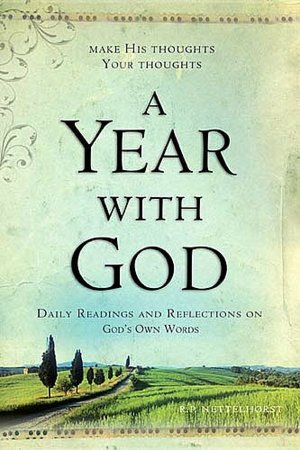 A Year With God
 A Year With Jesus
 The Bible's Most Fascinating People
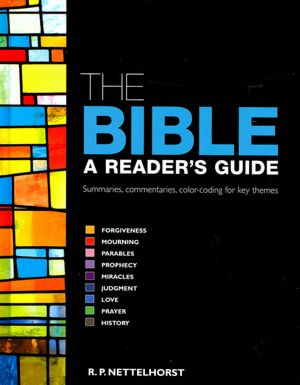 The Bible: A Reader's Guide
 Antediluvian
 Inheritance
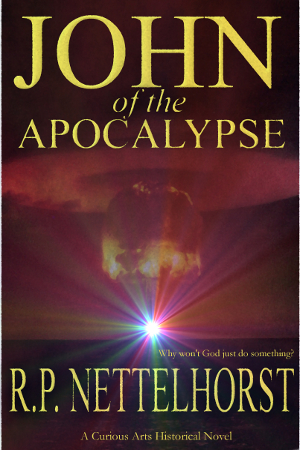 John of the Apocalypse
 Somewhere Obscurely
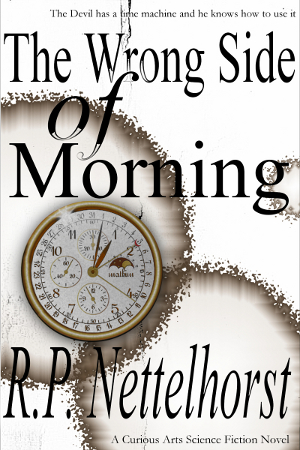 The Wrong Side of Morning

