
Most people have had the frustrating experience of purchasing an item at the store, bringing it home, and opening it up only to discover a box of confusing parts and a single sheet of paper with obscure drawings and words that were most likely translated by a computer from their original Chinese. If we don’t just pack it all back in the box and trudge to the store to get a refund, then we spend hours—mostly by trial and error—putting the rickety thing together, never quite sure if we should worry about the extra bits that we wind up storing in our garage.
Writing a book, particularly a work of fiction, is in many ways similar to putting together that set of shelves from Wal-Mart. We’ve seen books before, just as we’ve seen bookcases before. This marginal familiarity is both a help and a curse. The help, in that we have hope that we will be able to do the job. The curse, in that we’ve never really paid attention about how such a thing is actually put together.
Unfortunately, in building a book, unlike in building a bookcase, there are no kits you can buy. Instead, you’ll be looking for a forest so you can cut down the trees yourself. .
If you happen to find other like-minded people who are crazy like you and want to build books, one of the first things you’ll hear from them is that in writing a story, you must always “show” rather than “tell.” It becomes a mantra, but what does it mean?
One important aspect to book building is to be an observer of human beings, and a thoughtful observer of oneself.; thus, rather than writing something along the lines of, “George was mad” which tells us how George is feeling—in building a book, one learns that it is far better to write something like this: “George stomped from the room, slamming the door so hard the dishes rattled.”
Given that we’ve all seen people get angry, and doubtless we’ve been angry ourselves, the way to build a book is to let the characters act out their emotions. Then we see how they’re feeling without any need for telling. You’re making a thousand words in place of a picture.
Incidentally, a thousand words will fill about four double-spaced pages. Your first novel needs to be around eighty thousand words. That works out to about 320 double-spaced pages.
Writing requires discipline. Dedicate yourself to spending a certain amount of time, or creating a certain number of pages, every day. Don’t wait for inspiration. Just write. Fill up a page or ten and do it every single day without fail. If you do a page a day, you’ll have built a book in only a year. Just let it come out and don’t worry too much about how it sounds until after you’re done. If you try to rework as you go, you’ll never finish.
As to plot, learn about the Hero’s Journey. There are books you can get in the library that will tell you all about it. Joseph Campbell, the mythologist, was one of the first to notice it and you’ll find it is the framework upon which most stories are built, whether it is the story of Moses in the Bible, a murder mystery, a romance, or the first Star Wars movie. In a well-known quote from the introduction to his book, The Hero with a Thousand Faces, Campbell describes the basic plot outline: “A hero ventures forth from the world of common day into a region of supernatural wonder: fabulous forces are there encountered and a decisive victory is won: the hero comes back from this mysterious adventure with the power to bestow boons on his fellow man.”
One of the best ways to learn how to make a story is to read a lot of them. Pay attention to how other craftsmen before you created tension, wrote dialogue, and showed conflict.
And don’t tell your own life story. You can adapt events from your life in your book—that is what they mean when they tell you to “write what you know”—but generally speaking, you’ll find it is impossible to sell an autobiography unless you’re the first man on the moon. So when you create your book, keep your audience in mind. Would you pay money for the book you’re building?
Jerry Pournelle, the science fiction author, has written that writers should be prepared to throw away their first million words (4000 pages), because it will probably take them that long to learn how to write. Think of it as a woodworking project. Probably your first few tries at building something won’t turn out so well. But if you keep at it, eventually you learn how to make a bookcase that won’t fall apart.
Don’t forget: writing is like ditch digging. You don’t pay someone to give you the privilege of digging ditches. They pay you. The same with writing. It’s just a job. If someone offers to publish your book but they want you to pay them money, run away.
To find a publisher, go to writers’ conferences. They’ll cost you, but the investment in time and money is worth it. You’ll meet editors and agents face to face and you can tell them your ideas. Eventually one or more of them will ask to see your creation.
And don’t give up, no matter how often you get turned down or how long it takes. The difference between authors who are published and those who aren’t is simply this: those who are published didn’t give up.
 Send to Kindle
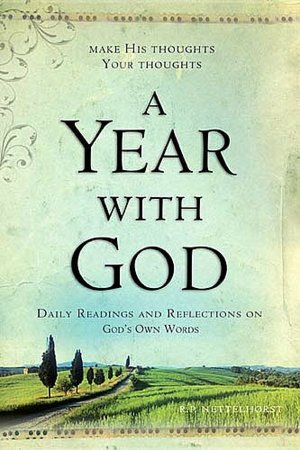 A Year With God
 A Year With Jesus
 The Bible's Most Fascinating People
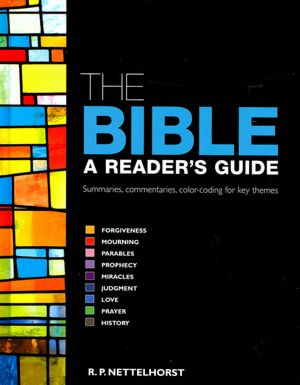 The Bible: A Reader's Guide
 Antediluvian
 Inheritance
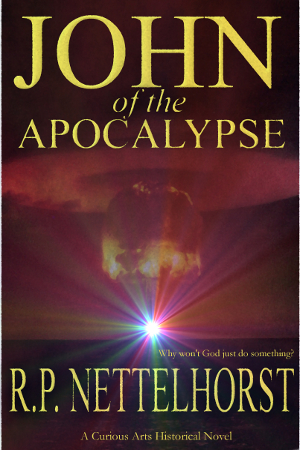 John of the Apocalypse
 Somewhere Obscurely
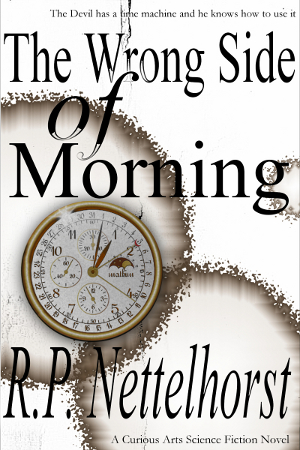 The Wrong Side of Morning

