The Prostitute Jesus Loved

In the world that Jesus had come to live in, women and men rarely spent time alone together. It was considered, as in modern Moslem culture, disreputable for a woman to spend time alone with a man to whom she was not in some way related. But Jesus tended to resist the constraints of his culture, and so when he found himself alone at a well with a woman, he simply struck up a conversation and asked her for a drink of water from the well.

Beyond the fact that she was a woman, there was one other strike against her from a Jewish perspective: she was a Samaritan, a member of an ethnic group that had been formed during the Babylonian captivity when the poorer Jews left behind in the land had intermarried with the foreigners transplanted to the region by the conquering Babylonians. According to the mainstream culture, Samaritans were vile sinners and heretical. Jews customarily went out of their way to avoid Samaritans.

Therefore, when Jesus talked to this young woman and asked for some water, her reaction was one of shock: “You are a Jew and I am a Samaritan woman. How can you ask me for a drink?” His behavior did not correspond to what she was used to.

Jesus answered her, “If you knew the gift of God and who it is that asks you for a drink, you would have asked him and he would have given you living water.”

“Sir,” the woman said, “you have nothing to draw with and the well is deep. Where can you get this living water? Are you greater than our father Jacob, who gave us the well and drank from it himself, as did also his sons and his flocks and herds?”

Jesus answered, “Everyone who drinks this water will be thirsty again, but whoever drinks the water I give him will never thirst. Indeed, the water I give him will become in him a spring of water welling up to eternal life.”

The woman said to him, “Sir, give me this water so that I won’t get thirsty and have to keep coming here to draw water.”

He told her, “Go, call your husband and come back.”

“I have no husband,” she replied.

Jesus said to her, “You are right when you say you have no husband. The fact is, you have had five husbands, and the man you now have is not your husband. What you have just said is quite true.”

“Sir,” the woman said, “I can see that you are a prophet. Our fathers worshiped on this mountain, but you Jews claim that the place where we must worship is in Jerusalem.”

Jesus declared, “Believe me, woman, a time is coming when you will worship the Father neither on this mountain nor in Jerusalem. You Samaritans worship what you do not know; we worship what we do know, for salvation is from the Jews. Yet a time is coming and has now come when the true worshipers will worship the Father in spirit and truth, for they are the kind of worshipers the Father seeks. God is spirit, and his worshipers must worship in spirit and in truth.”

The woman said, “I know that Messiah” (called Christ) “is coming. When he comes, he will explain everything to us.”

Then Jesus declared, “I who speak to you am he.” (see John 4:1-43 for the whole story)

The implication in Jesus’ words that she had “had five husbands” was not that she had been married and divorced five times, but rather that she had slept with men who were married to other women and that the man she was currently involved with was committing adultery with her, too. She is rather shocked and tells Jesus that he is obviously a prophet—and then she changes the subject to theology, asking him about where the right place to worship might be. She’d rather argue over one of the points that had divided the Jews and Samaritans for centuries rather than talk about the train wreck her life was.

Jesus calmly answers her question, letting her know that while the Jews were correct in worshipping in Jerusalem, the time had come for a change when the place of worship really didn’t matter at all: the real worshippers of God worshiped him in their spirits and in truth.

She tells Jesus, in essence, “gee, that’s fascinating” with a roll of her eyes and then comments, almost off the cuff, “well, whatever; when the Messiah comes, he’ll explain all that stuff, eh?”

At which point Jesus tells her something that he didn’t often tell people point blank: “I’m the Messiah.”

But for her it was necessary, and with those words, everything suddenly clicked into place for her: she realized that he wasn’t yanking her chain, that in fact, she actually was in the presence of the long awaited Messiah. She quickly ran back to her village and told everyone she could find. The result was something of a revival: nearly the entire village accepted Jesus as the Christ. Jesus was consistently successful in reaching those that the religious establishment rejected, whether it was tax collectors, prostitutes, or in this case, Samaritans.

What Jesus was doing was not earning him respect among the leadership of his people. But he wasn’t particularly concerned about that. He was just a doctor, healing the sick.

* * *

The Complaint of JacobMy latest book, The Complaint of Jacob, is now available for the Kindle. The subject: if God loves me, then why is everything going wrong?

Is there some formula we can memorize that will get us through life in one piece, with ourselves and our families living productive and prosperous lives? Where is the abundant living we thought we were guaranteed? What are we missing? What key do we need to unlock the blessings of God and finally achieve the wonderful life we know God wants us to have?

A low point in Jacob’s life offers a clue. The one true love of his life was dead. Joseph, his favorite, the oldest son of his beloved, had been gone for twenty-five years. Now Simeon had been taken from him and a tyrant in Egypt was demanding the last link he had to his dead wife. Beside himself with grief, we find his reaction in Genesis 42:36:

Their father Jacob said to them, “You have deprived me of my children. Joseph is no more and Simeon is no more, and now you want to take Benjamin. Everything is against me!”

The circumstances of his life, from his perspective, from the perspective of his sons standing around him, made his complaint that everything was against him, fully reasonable and perfectly understandable.

And yet, for those of us reading the story, the fascinating thing about his words is that we know that they couldn’t be more wrong. Despite the fact that his words seemed so obviously, unassailably true to him, we the readers of this little episode know something that Jacob doesn’t: we know that Joseph is not only not dead, but he is second in command in Egypt, then the most powerful and most wealthy nation on the planet. We also know that there’s no way for poor Jacob to know any of that.

His perception, his perspective of reality, is incorrect.

So how does this apply to us? Perhaps our problem isn’t the hurricane of life; perhaps it is only a problem of perspective, like poor Jacob.

Many “self-help” books seem to argue that success in life, however one measures success, can be gained by a formula, whether that formula is a prayer, rooting out hidden sin, or following a list of good things to do. I suggest the Bible takes a different approach, an approach to life that such books, and many Christians, are missing.

The question is not, what can I do to change my circumstances? The question is rather, do I believe God? And what can that answer do about how I then understand my circumstances?

Send to Kindle
Posted in Bible, Religion, Theology | Leave a comment

The Prodigal

Forgiveness and restoration don’t come easily. Jesus told stories to get his points across to those listening to him speak. The parable of the prodigal son is one such tale. The younger of two sons came to his father and demanded his inheritance up front. The father complied. The young man then went off to find his way in the world and wound up wasting all his money on wild living. Broke and hungry, he took up employment feeding hogs and found himself thinking their food looked appetizing.

Coming to himself at last, he told himself that his father’s servants lived better than this and so he resolved to return home and ask to become a servant in his father’s house, since he no longer deserved to be called his son.

His father saw him coming along the road and ran to meet him. The young man told his father, “Father, I have sinned against heaven and against you. I am no longer worthy to be called your son.” (Luke 15:21)

But the father told his servants, “Quick! Bring the best robe and put it on him. Put a ring on his finger and sandals on his feet. Bring the fattened calf and kill it. Let’s have a feast and celebrate. For this son of mine was dead and is alive again; he was lost and is found.” So they started to have a party.

Meanwhile, the older son had been out in his father’s field. When he came near the house, he heard the music and dancing and so asked one of the servants what was going on. Informed that his profligate younger brother had returned home and that the party was for him, he became furious and refused to join the party.

His father went out to talk to him and find out why he was so angry. The older brother told his father, “’Look! All these years I’ve been slaving for you and never disobeyed your orders. Yet you never gave me even a young goat so I could celebrate with my friends. But when this son of yours who has squandered your property with prostitutes comes home, you kill the fattened calf for him!”

“My son,” the father said, “you are always with me, and everything I have is yours. But we had to celebrate and be glad, because this brother of yours was dead and is alive again; he was lost and is found.”

Jesus told this story when some of the religious leaders criticized him for being friendly with “sinners” and eating meals with them. He wanted them to understand that God’s attitude towards sinners was just a little different from theirs: rather than wanting to see the wicked punished, God wanted to see them transformed, just as a doctor seeks to cure the sick, not bury them.

Abraham Lincoln is quoted as saying that the best way to destroy your enemies is to turn them into your friends. Although it may be fun to watch bad guys get “what they deserve” in the movies, in reality, it is much better if the bad guy can be turned into a good guy. Pharisees tend to find that not emotionally satisfying, however.

Send to Kindle
Posted in Bible, Religion, Theology | Leave a comment

Book Reviews

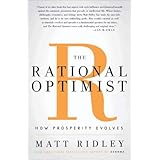
The Rational Optimist, by Matt Ridley

I have observed that not the man who hopes when others despair, but the man who despairs when others hope, is admired by a large class of persons as a sage.

–John Stuart Mill, Speech on ‘perfectibility’

One of the quotes that appears in the book, The Rational Optimist. Just finished reading it. Excellent book. What’s it about? This is the book’s description from Amazon:

Life is getting better—and at an accelerating rate. Food availability, income, and life span are up; disease, child mortality, and violence are down — all across the globe. Though the world is far from perfect, necessities and luxuries alike are getting cheaper; population growth is slowing; Africa is following Asia out of poverty; the Internet, the mobile phone, and container shipping are enriching people’s lives as never before. The pessimists who dominate public discourse insist that we will soon reach a turning point and things will start to get worse. But they have been saying this for two hundred years.

I very much recommend the book.

I’d also like to recommend the book Abundance by Peter Diamandis and Steven Kotler. Like Ridley’s book, it attacks the pessimists that seem to dominate most positions of leadership and influence in government and the news media. The book’s description from Amazon:

We will soon be able to meet and exceed the basic needs of every man, woman and child on the planet. Abundance for all is within our grasp. This bold, contrarian view, backed up by exhaustive research, introduces our near-term future, where exponentially growing technologies and three other powerful forces are conspiring to better the lives of billions. An antidote to pessimism by tech entrepreneur turned philanthropist, Peter H. Diamandis and award-winning science writer Steven Kotler.

Since the dawn of humanity, a privileged few have lived in stark contrast to the hardscrabble majority. Conventional wisdom says this gap cannot be closed. But it is closing—fast. The authors document how four forces—exponential technologies, the DIY innovator, the Technophilanthropist, and the Rising Billion—are conspiring to solve our biggest problems. Abundance establishes hard targets for change and lays out a strategic roadmap for governments, industry and entrepreneurs, giving us plenty of reason for optimism.

Examining human need by category—water, food, energy, healthcare, education, freedom—Diamandis and Kotler introduce dozens of innovators making great strides in each area: Larry Page, Steven Hawking, Dean Kamen, Daniel Kahneman, Elon Musk, Bill Joy, Stewart Brand, Jeff Skoll, Ray Kurzweil, Ratan Tata, Craig Venter, among many, many others.

Send to Kindle
Posted in Uncategorized | Leave a comment

What’s More Important?

The story of Jephtha in Judges 11 and 12 is very disturbing. Jephtha and his daughter demonstrate that sometimes following the rules is exactly the wrong thing to do. Jephtha became one of Israel’s leaders—traditionally translated as “judge”—and at the beginning of his first military campaign, he made a vow to Yahweh: if Yahweh gave him victory over the Ammonites, then the first thing to meet him when he came home, he would sacrifice as a burnt offering.

When he arrived home in victory, his only daughter came out to him dancing with joy. Aware of her father’s vow, she insisted that he fulfill it. But she did have a request:

“My father,” she replied, “you have given your word to the LORD. Do to me just as you promised, now that the LORD has avenged you of your enemies, the Ammonites. But grant me this one request,” she said. “Give me two months to roam the hills and weep with my friends, because I will never marry.” (Judges 11:36-37)

So, she went away for two months, but then she came back and Jephtha sacrificed her as a burnt offering, fulfilling his promise to God.

The reader of the story should be shocked and appalled. If you’re not, you’re not paying attention and you’re missing the whole point. Jephthah should not have kept his vow. Better to ask forgiveness for breaking an oath, than for murder. Not all promises are worth keeping. Some shouldn’t have been made in the first place, and though it is technically a bad thing to go back on your word—keeping a promise is generally considered a positive character trait—there are times when breaking the vow is the better choice.

The story of Jephthah serves as an illustration of something Jesus said in the New Testament about the letter of the law versus the spirit of the law. Legalism, zero tolerance, “well, the law says” are the copouts of the stupid, vile, and thoughtless. It is the attitude of bureaucracy, which knows that no one ever gets in trouble for following the regulations, even if it leads to the opposite of what the whole point of the regulation might have been.

Bottom line: Jesus told us that the most important commandments were to love God, and to love people. He further stated that it was on these two commandments that all of the Bible hung(See Matthew 22:35-40; Romans 13:8-10; Colossians 3:14; Galatians 5:14). If your interpretation, if your conclusion, if “keeping the rules” violates the prime commandments, then guess what: your interpretation, your conclusion, is necessarily wrong.

Send to Kindle
Posted in Bible, Religion, Theology | Leave a comment

Fools

The two verses of Proverbs 26:4-5 appear on the surface to be contradictory:

“Do not answer a fool according to his folly, or you will be like him yourself.
Answer a fool according to his folly, or he will be wise in his own eyes.”

But a moment’s thought make’s their point obvious: “damned if you do, damned if you don’t.” That is, no matter how you interact with a fool, you’re only going to get yourself into trouble. Another proverb tells us that “Better to meet a bear robbed of her cubs than a fool in his folly.” (Proverbs 17:12) These two verses therefore fit into that overall understanding of the nature of fools: when you see one coming, run away. Don’t have anything to do with them, because you’re bound to lose out.

After graduating from college, while I was working on my graduate degree at UCLA, I took up residence in a three bedroom house in Canyon Country that I shared with two other guys. One had been my roommate in college. The other was a new guy that we didn’t know so well when we offered him the room.

He had seemed nice enough when we first let him move in, but it wasn’t long before we realized that he had not exactly been blessed with wisdom. He repeatedly made odd choices in the things he purchased, and without fail fell victim over and over to scam artists. When the tropical fish that he’d paid five dollars for doubled in size, he insisted that it was now worth ten dollars, as if a tropical fish was some sort of an investment property. Worse, he was not always good about paying his share of the rent or utilities.

One day he approached me and asked me if I could teach him something to say in Hebrew. Apparently he wanted to impress people or something.

Being a bit devious, as well as annoyed with him in general, I rattled off a phrase. He dutifully tried to memorize it, and had me say it over and over again while he practiced until he could say it quite clearly. Satisfied, he went away happily muttering it to himself.

Unexpectedly, he never asked me what the phrase meant in English.

About three months later, after he’d been saying the phrase every chance he got to everyone he met, he sidled over to me one afternoon and finally asked me the obvious question: “Hey, what does that phrase mean?”

“Um,” I began slowly, “It means, ‘I am a stupid donkey.’”

He was quite angry, of course.

But my other roommate and I didn’t stop laughing for a long time.

Send to Kindle
Posted in Bible, Humor, Religion, Theology | Leave a comment

Mistaking Your Will For God’s

Josiah mistook his own will for God’s will–and it cost him his life. (2 Kings 23:29-30, 2 Chronicles 35:20-25) Josiah was a king of Judah noted for having restored the proper worship of Yahweh and for eliminating idols throughout the land. It was during his reign that the “book of the Law,” commonly thought to be the book of Deuteronomy, was rediscovered.

During his reign, the king of Egypt, Neco, took his army north toward a place called Carcemesh, to align himself with the Assyrians against the Babylonians led by Nebuchadnezzar’s father. To get there, he had to pass through Josiah’s kingdom. Josiah denied him passage and went out to fight him on the battlefield. In the resulting war, Josiah was killed. Neco ultimately got to Carchemesh, but the delay hurt and in the end, both he and the Assyrians were defeated by the Babylonians, who became the new dominant power in the Middle East. Within a decade, Nebuchadnezzar marched down upon Judah and conquered it. In the end, he would burn Jerusalem and destroy its temple, besides deporting the upper class of Judah to exile in Babylon.

Neco had told Josiah, when Josiah first threatened him: “What quarrel is there between you and me, O king of Judah? It is not you I am attacking at this time, but the house with which I am at war. God has told me to hurry; so stop opposing God, who is with me, or he will destroy you.” (2 Chronicles 35:21)

Send to Kindle
Posted in Bible, Religion, Theology | Leave a comment

It’s Not Always All About You

David wanted to build God a temple. He told the prophet Nathan about his plans and Nathan happily lets him know that it sounds like a great idea to him. Only later, after God talked to Nathan, did Nathan have to go back to David and let him know that God did not want him to build a temple after all. In the first place, Nathan explained, as God pointed out, it’s not like he was in need of a home. Second, the tabernacle—a portable tent—had served well for a few hundred years now and God had never voiced any complaints about the arrangement. And finally, although a temple was fine, David’s violence over the years made him not the right man to do the job. Instead, the job of building a temple would go to his son, Solomon. (1 Samuel 7:1-29)

Sometimes we see the goal of God. But sometimes that goal is not for us. We can see the Promised Land, but we’re not allowed to enter it. There are other people in the world besides us, and there are other people in the world that God is working with and through. Just because it’s a good idea and just because God wants to do it, does not mean that you’re the one for the job. God does have a plan for your life; but you’re not alone in having a plan. God is God and you’re not.

* * *

SomewhereObscurely0001smallMy novel, Somewhere Obscurely, is now available as a free e-book for the Kindle on Amazon. It is normally $7.99; it will remain free through Saturday, January 5, 2013.

Murder. Kidnap. Slavery. Then the real trouble began.

Mohado — vulgar term applied to timeslipped workers. Living as virtual slaves, these desparate workers move back and forth through time at the whims of their employers. This is Aramond Smith O’Reilly’s life. Witness to his mother’s murder, kidnapped, and sold into a life of misery… He will never know where – or when – he will be. After escaping wretched conditions, Aramond rises above his situation. Purchasing a timeship, he becomes the very thing mohados dread and fear: a coyote–one of those who transports and delivers the workers to those who would exploit them.

Send to Kindle
Posted in Bible, Religion, Theology | Leave a comment

The Way of Moses

When Moses murdered an Egyptian, it was an example of good intentions gone wrong. Moses witnessed one of his fellow Israelites being abused by an Egyptian overseer. Appalled at the injustice of it all, he sought to right the wrong himself and killed the abusive Egyptian. Rather than being greeted as a liberator by his people, the next day when Moses sought to break up a fight between two Israelites, one of them asked him, “Who made you ruler and judge over us? Are you thinking of killing me as you killed the Egyptian?” (Exodus 2:14)

Terrified, Moses realized that what he’d done was now public knowledge; his fears were confirmed when the Pharaoh sought to have him caught and executed. Running for his life, he fled to Midian, married a local girl, and spent the next forty years tending sheep.

Moses was right to be concerned about the Israelites. God was concerned too–and he had a plan. But just because Moses was concerned and had tried to rectify an injustice, didn’t mean that God endorsed his approach. Moses was right to want to see justice done. Moses was even right that God wanted Moses to be the one to do something about it. But: Moses was wrong about the method and timing. He had to wait 40 years for God’s plans to come to fruition.

Good intentions are not enough. The rightness of our cause is not enough. We must learn God’s way and then act, when he let’s us know the method and timing are right. There is sometimes a big difference between our way and God’s way, even when both are aiming for the same destination.

Send to Kindle
Posted in Bible, Religion, Theology | Leave a comment

Being Ezekiel

Ezekiel was God’s prophet to his people in Babylonian exile. God used him to speak his words and also used him to illustrate those words, whether by odd behavior (such as laying siege to a brick with toys) or making him mute except on those occasions when God wanted him to proclaim a message. The worst illustration that God ever asked of him came when God informed Ezekiel that the love of his life, his beloved wife, would die. Not only would she die, but he must make a point not to show sadness: no tears and no changing of clothing as would be customary. His grief must remain bottled up inside, where no one could see it. When those around him asked him about his peculiar behavior, he gave them the explanation: God’s temple was going to be destroyed. Like Ezekiel with his wife’s death, the people of Israel would have no opportunity to mourn: not for the loss of the sanctuary, or the death of the remaining Israelites in Jerusalem.

Even when we understand God’s reason for doing something, we may not like it or agree with it. Was the death of Ezekiel’s wife really the only way God had of making a particular point with his people? It is reminiscent of the man blind since birth, who suffered his whole life until he was past forty, simply so that Jesus could come, heal him and thereby show “the glory of God” (see John 9:3).

When something bad happens to us, we would like to be able to ask God, “why” believing naively that his answer would satisfy us and then we’d be okay with the tragedy. Ezekiel’s story illustates that such naivete is mistaken. Pain still sucks, whether you know the why of it or not, whether you can, in some abstract way make sense of it. Ezekiel knew exactly why his wife died. It doesn’t necessarily mean that he was satisfied by that knowledge. He still wanted to cry–and even that small relief was denied him. (Ezekiel 24:15-27)

Send to Kindle
Posted in Bible, Religion, Theology | Leave a comment

God is Still Near

When facing problems that won’t leave, God is still near. An otherwise unknown author named Asaph wrote a Psalm reflecting the darkness that sometimes afflicts the human heart. He opens his poem by writing,

I cried out to God for help; I cried out to God to hear me.
When I was in distress, I sought the Lord; at night I stretched out untiring hands and my soul refused to be comforted.
I remembered you, O God, and I groaned; I mused, and my spirit grew faint.
You kept my eyes from closing; I was too troubled to speak. (Psalm 77:1-4)

What exactly is troubling Asaph? He doesn’t say. The value for the reader is the universal applicability of his feelings. Whether we’ve experienced the loss of a loved one, the breakup of a relationship, financial setbacks or illness, the words express the misery of the human heart in turmoil. Asaph wants God to make the pain go away; he wants to experience peace, calmness, and comfort. But despite all his tears, all his pleading, comfort never comes. God does not break through the clouds. Instead, the gloom remains.

Devastated now by both his problems and the refusal of God to respond to him in his hour of need, he casts about fitfully, wondering what he can possibly do.

Then it comes to him: he will remember God’s faithfulness in times past. He will recall the character and actions of God in other situations, other moments, and comfort himself with the notion that, even though his heart is broken with no healing in sight, he will choose to believe that God is there and that God has not abandoned him, regardless of how it looks just now. If God could rescue the Israelites from Egypt, bringing them through what seemed the insurmountable barrier of the Red Sea, then God will surely see Asaph through his current crisis.

Near the end of his poem Asaph comments that God led the Israelites through the sea, “though your footprints were not seen.” Asaph can’t see God, but then neither could the Israelites. Not seeing God at work does not mean that God isn’t.

Send to Kindle
Posted in Bible, Religion, Theology | Leave a comment