Image of God

Genesis 1:26-27 records the bare statement that Adam and Eve were made in His likeness:

Then God said, “Let us make man in our image, in our likeness, and let them rule over the fish of the sea and the birds of the air, over the livestock, over all the Earth, and over all the creatures that move along the ground.”

So God created man in his own image, in the image of God he created him; male and female he created them.

What does all that mean? The significance of humans existing in the image of God is that they therefore are very valuable and important. In Genesis 9, following the flood, God stresses the image of God as the fundamental difference between humans and animals. Animals were for food—but not people.

Perhaps the significance of the image of God is all that we need to understand. However, Christians have long wondered exactly what God might have meant when he said we were created in “His image”. The traditional answer given by most Christians runs as follows:

Men and women possess attributes of personality:

• Reason
• Creativity
• Love
• Morality
• Freedom
• Responsibility
• The ability to commune with God

The above list is all well and good, but it raises two valid questions. The first, is how does this list significantly differentiate us from the animals? Certainly there is a difference of degree between humans and animals, but the Bible strongly suggests that there is a significant difference of kind, which the above list doesn’t clarify. The second question that needs answering is likewise devastating: where in the Bible is the “image of God” ever defined as it is in the list above?

Could we define “image of God” to mean simply that we look like him? If the reader searches a concordance, he or she will find that every occurrence of the Hebrew words “image” and “likeness” refer to a physical resemblance. In fact, “image” is often used to describe an idol. It is most logical, therefore, to conclude that the image of God in human beings is exactly what a natural understanding of the words imply: human beings were made to look like God. Moses contrasted what was normal in his society with a different reality: where in the ancient Near East it was universally the case that people made images of gods, God now taught that instead, He made people as images of himself.

Many of the early church fathers wrote that the image of God must include the physical and bodily characteristics—not just the immaterial.

But then we will find passages in the Bible which speak of other qualities for God, i.e. “his wings” (Psalm 17:8; 91:4; and Ruth 2:12). In Genesis 15, he appears as a smoking fire pot. As the Israelites wander the wilderness God appears as a pillar of fire at night, and a pillar of cloud by day. In Exodus he appears to Moses as a flaming bush.

One must ask the question, whether appearances are symbolic in the same sense language—words—are symbols of the underlying reality, but are not that reality themselves. The black lines on the page spelling out “water” do not quench my thirst or wash my body; they merely symbolize the sound which symbolizes the substance that I could fill my swimming pool with.
So, when God manifests himself, is his appearance part of the symbolism that allows clear communication in other respects, such as his choice of language and vocabulary, and general adjustment to the cultural background of those he contacted? God, after all, wished to be perfectly clear to those to whom he talked. So, when we see God appearing as a biped in Genesis 18, is that appearance the one that corresponds to ultimate reality, or is it his appearance in Genesis 15 as a smoking fire pot?

Worse, if we argue that physical appearance is what constitutes the image of God, then what of human beings who are deformed, whether by birth or through some tragic accident? Do such people then lack the imago dei?

This same problem faces us if return to the more traditional formulation of “image of God” as a list of cognitive elements, such as reason. If the traditional list is right, then what of the retarded, the autistic, the insane, those with Alzheimer’s, or even the fetus? Is their lack of—or severely damaged—reason, volition, emotions and the like indicative of their no longer having—or perhaps never having—the image of God in them? The eugenic Nazi might be happy to argue that way, but for the rest of us, it demonstrates that neither the physical nor the mental are likely correct, or most certainly less than complete, understandings of the “image of God.”

And the problem only grows. If the thought of excluding some human beings from the image, whether for physical or sentient reasons is distasteful and repugnant, what will we do with non-human sentience, whether extraterrestrial or electronically based that we may come upon or create in the future?

Obviously, this question of the “image of God” is far more complex than it may at first appear.

There is, I think, a way out, however.

In the New Testament, the Church is described as the “body” of Christ. No individual Christian is the body of Christ, but he or she is part of that body (cf. 1 Corinthians 12). Perhaps the “image of God” in man is not in individuals, but is in the species as a whole. That is, humanity is collectively the “image of God” and each individual is a part of that—an important part. Just as each individual Christian is important, serving a function, so each individual human being does the same for humanity as a whole.

That this could be the sense of what was intended becomes likely when we consider that the first nine chapters of Genesis are consistent in using the term “the Man” (Heb. ha-adam), from the creation through the flood, to refer first to the single individual who was the first man, and then as a general term for the species as a whole. This usage continues through to the flood of Noah, when God decided to destroy “the Man.”

Likewise, assuming the image of God is expressed in humanity as a whole explains and clarifies the comment God makes in Genesis 11, when he says that “nothing will be impossible for them”–for humanity. That is, God states that if humanity imagines it, humanity can do it. Humanity’s capability is unlimited, unless God himself intervenes. Human beings can do what God can do, and in fact, that was God’s original intention. The essentially unlimited potential of humanity is the inevitable consequence of God making creatures like himself. It is fundamental to the meaning of the statement “in our image, after our likeness.”

Perhaps the plurality of humanity, then, is a reflection of the plurality of God, seen in God’s use of plural pronouns for himself at the moment of humanity’s creation. Understanding the nature of the image of God in humanity makes the lie of the serpent (Genesis 3) all the more destructive, because he implied to Eve that unless she ate from the fruit, she (and by implication) her species would forever fail to truly be “the image of God.”

The concepts in the New Testament of the church becoming the bride of Christ, of Christians being adopted into God’s family, of becoming the friends of God, and of Jesus being our brother, are simply other ways of stating that we collectively reflect God. A consequence of this is that to criticize something because “we’re playing God” may not be reasonable. It appears that humanity “playing God” was precisely God’s plan from the start. Perhaps just as Eve was a “helper fit for” or “equivalent to” Adam, so humanity is that for God.

Send to Kindle
Posted in Bible, Religion, Theology | Leave a comment

Find a Busy Person

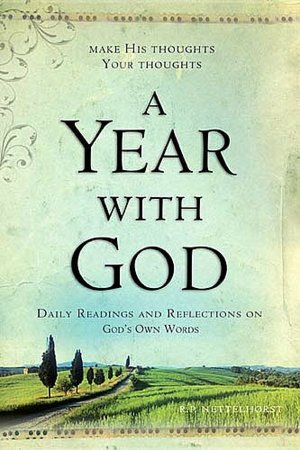
If you want something done, find a busy person. Why? Because a busy person is someone who can get stuff done—otherwise he or she wouldn’t be so busy. Unfortunately, I’m a busy person. When I finished writing A Year With God, something I accomplished from start to final rewrite in three months–I was tired. But having finished the book, and with it being accepted by the publisher, that meant I finally got paid the final third of my promised payment. And having a pay day meant that my wife’s plan for our master bathroom could finally be set in motion.

If I were a bestselling author on the order of a J.K. Rowling who wrote the Harry Potter books, then I would simply have found some contractors, collected bids, and then spent the next couple of weeks in a hotel while they tore my bathroom apart and put it back together. Or maybe I’d just buy a new house. Unfortunately, my books are not quite as popular as Harry Potter, so a remodel plan meant the contractor was me. Another job on top of all the other stuff I was doing. Like trying to work on my next book, with its deadlines fast approaching. How fast? At the time, I had barely two months left before I had to have that book finished, including the final rewrites and edits. All three hundred eighty-four pages of it (A Year With Jesus).

But my wife had been waiting a long time for her new bathroom. And over the previous two years I had somehow remodeled my daughters’ bathroom, remodeled my kitchen, and remodeled my living room. The master bathroom was simply the last piece in the grand plan that my wife had for our house.

This remodel began as all remodels begin: with a trip to the local hardware store so my wife could show me what she had in mind. The centerpiece of her plans was the replacement of the then current shower stall with a Jacuzzi-style bathtub. Given that the dimensions of the shower stall were the same as those of the tub she wanted, how hard could it be?

The next step, therefore, was to take out the old, to make way for the new. For this, I needed a sledge hammer. Probably the idea of taking a sledgehammer and hitting a bunch of stuff with it sounds appealing, perhaps a way to get out all your aggressions. That theoretical dream fails to take into consideration the physical reality of swinging a sledge hammer. Sledge hammers are heavy. So the fun of smashing stuff lasts, oh, maybe two or three swings. After that, it is just hard work.

On top of that I have severe allergies and asthma. And I was doing all this during the time of year pollen levels were at their highest. Thankfully, I have and had good prescription medication, so I barely notice my allergies.

Unless I’m pounding on a wall of tile with a sledge hammer. Oddly, that created quite a bit of dust. Which led to sneezing. And a mild asthma attack. But I avoided a hospital visit.

After working for about eight hours on Saturday, the bathroom was at last stripped of tile and the old shower was gone. The old shower stall had a drain in the exact center. I had hoped, when I took up the shower floor, I would discover the drain pipe running from the wall to that center. Unfortunately, I simply found concrete, except for a two square foot spot in the center where the drain pipe was. Given that the new tub has a drain pipe on the far right side, as most tubs do, I had a bit of a problem.

My first thought was to drill holes through the concrete slab—but given that it took me about a half hour to drill one ¾ inch hole through five inches of concrete, I decided that was not a practical solution. My next thought was that I would rent a jackhammer to smash through the concrete.

By then it was late, so I went to bed. Easter Sunday, I awoke with a headache that lasted most of the day. We spent that morning with my brother-in-law and his family at his church, an hour’s drive from my house, where his youngest son and daughter were getting baptized by my father-in-law (who was a retired pastor). Feeling tired and grumpy, all I had wanted to do was sit. But the pastor of this distant church knew me, because he’d attended several of the conferences where I’ve spoken. So he asked me to assist him that morning in serving communion.

After enjoying Easter dinner with my in-laws, I finally got home late in the afternoon and promptly took a nap for about three hours. Thankfully, my headache left me. I also came up with a solution to the plumbing for my new tub that wouldn’t require the jackhammer: I would simply build a four inch platform for the new tub and then run the pipe across the top of the concrete and down into the old drain. This worked splendidly, and the raised tub actually looks nice.

Of course, just because my wife’s plans for my house were nearly done, didn’t mean I didn’t have more remodeling to do. My wife has parents. And their house needed a bathroom remodel, their kitchen sink needed to be replaced, and they wanted me to put ceramic tiles in their dining room and kitchen.

Maybe someday I’ll have a best seller and then I can just hire someone to do all that stuff for me. Or maybe someday I’ll learn how not to be a busy person.

Send to Kindle
Posted in Writing | Leave a comment

Dawn

Early in the evening of September 27, 2007, a Delta II blasted off from Space Launch Complex 17B at the Cape Canaveral Air Force Station. On board was Dawn, an enormous unmanned spaceship designed to visit two asteroids: Vesta,and Ceres. Vesta is the fourth asteroid ever discovered and the second most massive of the asteroids. Ceres is both the first asteroid ever discovered as well as the largest. In fact it is so large that it is now classified as a dwarf planet.

Weighing 2800 pounds and bearing two solar panels that stretch 65 feet from tip to tip, Dawn is powered not by chemical rockets, but by an ion propulsion system first tested on the Deep Space 1 probe that launched in October, 1998. Deep Space 1 flew past asteroid Braille and comet Borelly. Its mission was completed by the end of 2001.

On a normal spaceship, the chemical propellant (usually either liquid oxygen and liquid hydrogen, or liquid oxygen and kerosene) makes up the bulk of the weight. For example, when the space shuttle rockets into orbit, it burns more than two million pounds of solid rocket propellant in the twin solid rocket boosters within two minutes. Meanwhile, the large external tank carries more than 1.5 million pounds of liquid oxygen and hydrogen, every drop of which is used in the eight and a half minutes it takes the shuttle to climb to orbit, going from zero to 18,000 miles per hour in order to reach an altitude barely 150 miles up. It thus burns through more than 16,000 pounds of solid rocket fuel per second and nearly 3000 pounds of liquid fuel each second. The space shuttle’s twin solid rocket engines alone put out nearly six million pounds of thrust.

Dawn’s ion propulsion, in contrast, is only a tiny fraction as powerful as the chemical engines used on a shuttle. The amount of thrust put out by Dawn’s engines is the equivalent of what your hand feels holding a single sheet of 8½ by 11 inch paper. But while a chemical rocket dumps its whole load of several million pounds of propellant in just a few minutes, an ion engine can burn its propellant continuously, non-stop, for years. Dawn was sent out of Earth orbit using standard chemical propulsion—but once out in interplanetary space, the ion engines took over. After burning for 11 days non-stop, just to check to make sure they were functioning properly, Dawn began its long-term cruise state on December 17, 2007. The engines then burned non-stop until October 31, 2008, when it was by then on course for its gravity assisted flyby of Mars on February 17, 2009, which sped it on its way into the asteroid belt. During those 270 days of continual thrusting, it used only 158 pounds of propellant. During its entire mission—flying to Vesta, orbiting Vesta, leaving Vesta and then going to Ceres and orbiting Ceres, with its engines firing continuously for years—it will use a grand total of barely 900 pounds of propellant. Contrast that with the space shuttle which uses more than three and a half million pounds of propellant in less than nine minutes just going to orbit, 150 miles up.

If automobiles got the sort of mileage Dawn gets, you’d fill up your car once when you bought it and your grandchildren’s grandchildren would still be driving around on that same tank of fuel. Of course, it would take you a full day to get from zero to sixty miles per hour.

What exactly is ion propulsion? The propellant is Xenon, a colorless, heavy, odorless noble gas that exists in trace amounts in Earth’s atmosphere. Electricity from Dawn’s large solar panels breakdown the gas and send its ions zooming from the nozzle of the engine. Though the ions don’t weigh much, their speed is high. Thus it makes for an efficient, if low power, thrust that builds up over time, ultimately giving the spacecraft a very high velocity.

On July 16, 2011, Dawn settled into orbit around Vesta. Escape velocity from Vesta is only 78 miles per hour, compared to 25,000 miles per hour for Earth. Vesta averages only about 330 miles in diameter, with a surface gravity so weak that an astronaut standing on its surface would still feel weightless. Your average baseball pitcher would be able to hurl a fastball from Vesta on an escape trajectory. If he aimed it just right, he could hurl it all the way back to Dodger Stadium. In fact, an astronaut would have to be very careful: if he jumped too hard he would never come down again. He’d escape Vesta’s gravity and float away into interplanetary space.

Vesta is not quite round, but it’s close. After spending a year orbiting, mapping and studying Vesta, Dawn fired up its engines and left orbit on September 5, 2012. Dawn is now en route to Ceres, with a scheduled arrival in February, 2015 (the same year that the New Horizons spacecraft will reach Pluto). Unlike Vesta, Ceres, is actually round. It is nearly 600 miles in diameter and is thought to have an enormous amount of water ice on and in it. In fact, the evidence at this point suggests that Ceres might actually have more fresh water than Earth does, albeit not in liquid form.

Send to Kindle
Posted in Science, Space, Technology | Leave a comment

English

English is currently the primary or secondary language in many countries, and in fact it is the most widely taught and understood language in the world. Although Modern Standard Chinese has more native speakers, English is used by more people as a second or foreign language. Over 400 million people speak English as their first language. Estimates about second language speakers of English put their number at around 1.5 billion. English is the dominant international language in communications, science, business, aviation, entertainment, diplomacy and the Internet. It has been one of the official languages of the United Nations since its founding in 1945 and is considered by many to be the universal language.

Those who fear that the language of some new immigrant group to the United States is going to somehow displace English are worrying about something that simply won’t happen. Their fear flies in the face of both the overwhelming dominance of the English language, and the history of all previous immigrant groups in the United States. In the nineteenth century, for instance, new immigrants from Europe gathered in linguistic enclaves, established newspapers in their old European languages, established businesses and put up bi-lingual signs. Within three generations, all those old European languages were forgotten, the newspapers had gone out of business or transformed themselves into English dailies. Yet, far fewer people spoke English in the ninteenth century than now.

Far from being threatened, English is more likely to kill off several other living tongues over the next few generations, since the numbers and percentages of English speakers is increasing every year.

English, of course, does not sound the same everywhere it is spoken. Though one can easily converse with someone from England or Austrailia, every so often words or phrases pop up that make everyone scratch their heads. Despite all the contact between Australia and the United States, for instance, most Americans hearing the lyrics to the song Waltzing Matilda believe that it has something to do with dancing. Instead, “Matilda” refers to a knapsack worn by a hobo, and so the song is actually describing the life of a vagabond.

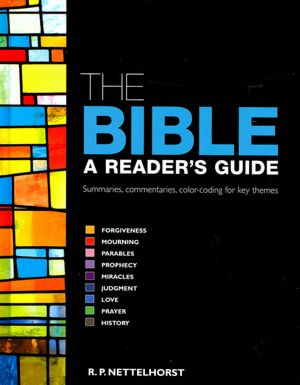
Although my books, The Bible’s Most Fascinating People and The Bible: A Reader’s Guide were published in the U.S., my primary publisher is actually Quarto, a British publisher in London. As a consequence, my editors were in London, and all my correspondence and phone calls were to people with London accents who would sound at home on the BBC. And, although for the most part I’ve never had any difficulty understanding them, there are occasional, momentary puzzles.

Once, while my family and I were in Disneyland, I got an email and later a voicemail from my London editor informing me that my contract (I forget for which book) was ready and that she’d “courier” it to me. My first thought was that some little guy on a bicycle would be carrying the contract to me. However, I quickly dismissed that as improbable since last I checked there were no bike lanes across the Atlantic. So my second thought was that she meant what an American would mean if she had said she’d “overnight” it—or more commonly, “Fed-ex” it.

My second thought was the right one, of course. The contract arrived in a sealed plastic envelope, with the name of the British company emblazoned on the outside: “Inter Continent Couriers Ltd.” Perhaps that’s as common as Federal Express is for us in the U.S. Once it had reached our shores, it was DHL that picked it up and actually delivered it to my door.

So I signed the contract and faxed it back to her. My friends and family whom I’ve showed the emails I’ve gotten from London comment on how “British” they sound. Even written languages have an “accent.” Despite the fact that the British and Americans speak the same language, it only takes a handful of sentences for us to realize that we’re not reading something written by a guy in Kansas, or vice-versa, someone from South Kensington.

Send to Kindle
Posted in Writing | Leave a comment

Where Does the Time Go?

During my senior year of high school I lived in Homestead Florida, a town that described itself as the “gateway to the Everglades.” My dad was in the Air Force and he was stationed there. What that meant in practical terms was that it was humid and we were surrounded by a swamp. Mosquitoes were common and large, though to say that they carried off small house pets would be an exaggeration.

When I am under deadline for a book, I will often work many days in a row without a break. While I was working on A Year With God, I worked a whole a month with no days off, a consequence of laboring to finish the second third of it to meet a deadline. I had about 36 days to do the first third and I had about 36 to do the last third, but I’d only been given 29 days to do the second third. It was tiring, but I managed it. So when I finished that second third, I finally took a weekend off and relaxed. Recalling that time–and even now, without any pressing deadlines–I have been reflecting on how busy I tend to be.

Which got me to thinking about my swampy senior year of high school. I don’t recall feeling so overwhelmingly busy back then, and I’m not entirely sure why, since I was really very busy. Admittedly, children usually do not have jobs, but they are still in school all day, five days a week. My senior year I had to arise before the sun came up and I took a long bus ride to school. I had homework when I got home—a lot of it, since I had honors classes and still managed to graduate with all As. Despite that, I recall endless hours spent on a model railroad or on my stamp or coin collection and listening to classical music on the radio. Admittedly, I was an odd teenager. Somehow, in all of that, I also found time to write novels (I wrote my first when I was 16 and from then til now, for the most part, I do at least 10 pages of writing per day). I also read voraciously, and watched television not infrequently.

But I don’t recall any sense of being overworked or over tired. How did I do it?

What is my problem now, that I feel like I have no time for myself? Does it somehow relate to the sad reality of being middle-aged? Is it just that I’m simply not as spry as I used to be? Possible, I suppose, but I know some younger people that have trouble keeping up with me. In fact, my children are constantly complaining about how fast I walk and they don’t like how I pick parking spots as far from the stores as possible. Walking is good for your health, I tell them, but they don’t believe me.

So I’m wondering if my problem with feeling overworked is simply an attitudinal issue. If so, I’m going to have to work on altering it and recovering my high school mindset. Perhaps I need to discover again the art of leaving my work at work rather than carrying it with me in my head all the time. When I was in high school, I was able to keep my school life and my non-school life separated. Maybe I need to do that with my work.

In a world filled with cell phones and the internet, it can be hard to go completely off the clock. There’s nearly no place to go to get away from our labor. People can call us, text us, and email us no matter where we happen to be. Day or night. When I was working on A Year With God (a bit of a misnomer since I only spent three months writing it, including all rewrites and revisions) I regularly got requests from my editor at 11:30 PM–and she was back east, while I’m on the west coast! I’m not sure that woman ever slept.

Since I work from an office in my home, getting away from work is even harder. When do I begin work? When do I end work? And how can I tell? In the old days, I physically left my job. When I was in graduate school at UCLA, there was actually a time clock that I punched when I arrived at my job and when I left. But not anymore. Now I commute from my bedroom to my office and I find that I hardly ever leave my office until I’m back in my bedroom to sleep.

So what am I going to do? Something all of us need to do. Turn off our connections to work at the end of the day. We need to shut off the office in our heads and find something else to think about and do. Eight or so hours a day is long enough to work, and we need to work only five days a week. It is good to work hard, but we can work harder and better if we know when to quit. “All work and no play make Jack a dull boy,” so goes the old cliché. The dullness is not so much in the sense of making him boring and uninteresting to be around, as it is that it renders him dull of mind, and dull of energy. If we don’t take time off we might be able to impress our peers by telling them how many hours we’ve put in and how tired we are. But in the end, in cold reality, we will actually just make ourselves dull: accomplishing less and doing it less competently.

Send to Kindle
Posted in Writing | Leave a comment

Antarctica

Two organizations raced to get to their destination, stretching the available technology to achieve their goals. Only one could get there first. National pride and personal pride were at stake. But we’re not talking about a race to the moon. In the early half of the twentieth century, Amundsen and Scott were in a race to the South Pole.

People sometimes get depressed as they contemplate the sad fact that the last time human beings stood upon the surface of the moon was in 1972—nearly forty years ago. In contrast, people point to the history of aviation. Forty years after Orville and Wilbur Write made their first flight in 1903, air travel had become common. Passengers were flying around the world. The jet engine had been invented. And military aircraft were an important part of warfare.

But where is the comparable advance in space travel? Where are the lunar colonies, the flights to Mars, the mining of the asteroids and missions to the moons of Saturn?

The mistake comes in comparing two entirely different sorts of activities. Improvements in the technology of flight—the increase in size and the increase in the amount of travel actually are comparable between airplanes and spacecraft. In the forty years since Apollo ended, the ease of human travel into space has increased. Moreover, unmanned spacecraft have visited every planet in the solar system. Our civilization is dependent upon our spacefaring for its very existence now, with communication and navigation tied into the existence of orbiting satellites in ways that would have been unimaginable when Eugene Cernan of Apollo 17 became the last man on the moon.

No, the better comparison to our lunar explorations of the late sixties and early seventies (1969-1972) is not the history of airplanes. Instead, it is the history of Antarctic exploration.
On December 14, 1911, a group led by the Norwegian explorer Roald Amundsen became the first people to ever reach the South Pole. One month later, the British explorer and Royal Navy officer, Robert Scott arrived, but he died on the trip back.

For the next forty-five years, no human being ever stood upon the South Pole again. It wasn’t until October 31, 1956, when U.S. Rear Admiral George J. Dufek and his crew landed a R4D Skytrain—a modified Douglas DC-3—aircraft, that people once again touched the South Pole. They established the Amundsen-Scott South Pole Station, which is still occupied year round by researchers.

Between 1911 and 1956 there had been multiple expeditions to the continent of Antarctica. Ernest Shackleton led the Imperial Trans-Antarctic Expedition in 1914 intending to cross the continent by way of the South Pole. His ship, the Endurance, was trapped and destroyed by the ice pack before they even reached Antarctica. They survived the disaster by trekking across pack ice to Elephant Island. Shackleton and five of his crewmates then took a small boat across the Southern Ocean to South Georgia, an island in the South Atlantic where they were finally able to get help and rescue their colleagues left behind. US Navy Rear Admiral Richard Byrd led five expeditions to Antarctica during the 1930s, 1940s, and 1950s. He even flew an airplane over the South Pole in 1929.

But between the first visit to the South Pole by Amudsen and Scott and 1956, there was no permanent human structure at the South Pole, and very little human presence in the interior of Antarctica at all. The few scientific stations in Antarctica were located on and near its seacoast.

But since 1956, the Amudsen-Scott South Pole Station has been continuously occupied. The base has been rebuilt and modified extensively since its founding. The current station was officially dedicated on January 12, 2008. It is an 80,000 square foot, two story building of modular design. Elevated, it can be raised and adjusted to keep it above the ever deepening snow level at the South Pole. During the summer, the station population is usually around 200 people; it drops by three-fourths during the winter months, when the station is cut off from any possibility of resupply. In 2010, forty-seven people spent the winter at the station.

Forty-five years passed between the first and only visit by human beings at the South Pole until a permanent base was constructed. It has been barely forty years since the last person visited the moon.

Currently, six people continuously orbit the Earth in the International Space Station, which has an interior volume of 32,000 cubic feet, about the interior volume of an average five bedroom house. Thus, it is much smaller than the current base on the South Pole. But of course it has been a hundred years since the first person stepped on the South Pole, while the first person went into space but fifty years ago on April 5, 1961, and the first person reached the moon but 44 years ago, on July 20, 1969.

So we’re really not doing so badly as some people like to think.

Send to Kindle
Posted in History, Science, Space, Technology | Leave a comment

How Science Fiction Becomes Mundane

In the mid-1980s a bank had a series of commercials set in a foreign country. A small boy ran about shouting “ATM, ATM” in such a way that at first one imagined he was shouting someone’s name as he looked for him or her. In the final shot, grateful tourists found the banking machine and got their desperately needed cash. Today, we don’t think twice about the ATM and rarely, if ever, have any difficulty finding one. About the only complaint we might have is the fee that we have to pay for using it, if it happens to belong to a bank that is not our own.

When I first arrived at college for my freshman year, I had no car. Therefore, when I selected my bank my selection was based on but one thing: could I easily walk to it? If I left the campus the back way and hiked over a hill, it was no more than ten minutes from my dorm room.

Although the first ATM went into use as early as 1967 in London and the first networked ATMs appeared in the US by the early 1970s, they did not become common until the 1980s. My first exposure to something resembling an ATM came after I graduated. One of the local grocery store chains issued a card. If you put it into a machine in the back of the store and entered a code, the machine printed out a receipt that you could take to the checkout counter. The cashier would then give you however much cash you had selected, up to forty dollars. My roommate and I delighted in being able to get money on a Saturday or Sunday night for burgers or a pizza.

When my local bank first offered actual ATMs for depositing our checks or for getting cash I was initially leery. I’d been making deposits or withdrawals using the teller for so long, it was hard to imagine doing it any other way. At first, I used the ATM only on weekends or when the bank was closed. But as time went by, I became accustomed to using the ATM. It wasn’t long before I stopped using a human teller altogether, because the ATM meant—at the time—no lines. I spent much less time at the bank, and saving time was a priority for me during my years in graduate school.

By the time I got my second computer in the mid-1980s, I became an early adopter of online banking. Using dialup, it was very slow and I had to pay a monthly fee. Like the ATM, at first I was rather fearful about using it to pay my bills, preferring instead to continue the old fashioned way: writing checks and dropping them in the mail.

But after the post office lost a car payment and a couple of other bills, I eventually switched to doing all my bill paying through my computer. The postal service offered no guarantee of delivery. If they lost a bill payment, I could fill out a complaint form. But they wouldn’t fix things with my creditors. In contrast, my bank offered a guarantee: if a payment didn’t go out like it was supposed to, not only would they correct the error, they would talk to my creditor and pay any late fees. I learned that doing my bill paying electronically was not only much quicker than writing checks, it was actually safer. My bank dropped the fees for home banking in the 1990s, so paying electronically also became much cheaper than using the post office: no more buying postage stamps. Today, even the bills arrive electronically rather than by the postal service. Most of them I now pay automatically, leaving me even more time for other things.

In the 1980s it took me hours to do my taxes. Then I discovered that there were computer programs that you could buy: in modern parlance, “there’s an app for that.” As always, I was a bit reluctant to make the switch, but once I did, I wondered why I hadn’t done it sooner. Rather than spending hours with confusing instructions and complicated forms to fill out, the computer presents me with simple questions and does most of the work for me. No more adding and subtracting, finding a number on line 2 and writing it again on line 10. No more running back and forth to the post office or library to get more forms. What took me four or five hours, sometimes spread over a few days, I now accomplish in less than a single hour. And rather than waiting a month for my refund to come by mail, I file my taxes electronically and have the government deposit my refund directly into my banking account barely a week after filing.

Just as modern ovens and stoves have made cooking quicker, just as modern plumbing has eliminated outhouses, just as washing machines and vacuum cleaners have lessened our toil and shortened the time it takes to accomplish what our ancestors spent long hours on, so ATMs and electronic banking have made certain unpleasantries of life less annoying. And what had seemed marvelous, I now simply take for granted, like flipping a switch to turn on the lights.

Send to Kindle
Posted in Culture, History | Leave a comment

Apples

When my father-in-law was still alive, we’d make an annual pilgrimage to the apple orchards at Oak Glen near Yucaipa. Crowding my three children into a minivan for the long trip was a choice my wife and I made willingly–and once they finally settled in to the two hour trek, the kids were okay with it too. The sniping and poking and complaining eventually faded away.

Among the many small shops at Oak Glen, one can purchase any number of apples and apple derived products, ranging from apple butter to apple syrup. There are places where you can taste the different varieties and sample the fresh cider. And for a small fee, you can go out into the orchards and pick baskets of apples for yourself. Remarkably, our teenage daughters actually enjoyed picking apples.

We also took a ride in a horse drawn wagon on the Riley family farm up there. A tour guide talked about the history of the region and told us a variety of facts about apples. For instance, back around 1884 when a man named Henry G. Wilshire arrived in Los Angeles, he was able to purchase about 3000 acres of land in the area for only eight dollars, plus a jug of whiskey. He’s better known for the boulevard in Los Angeles that’s named after him, of course. The three hundred or so acres that made up the Riley farm were purchased from him some years later.

After unsuccessfully attempting to grow potatoes and a couple of other different crops on those three hundred acres, the Rileys finally settled on apples and have been successful at that for the last hundred years or so. Apples are related to rose bushes. They are relatively small trees ranging between ten and forty feet tall, depending on the sort of apple tree it is. The varieties of apples are called cultivars and there are more than 7500 known cultivars or varieties. The tree originated in central Asia. The wild ancestor of the domesticated apple can still be found growing wild in parts of Kazakhstan, Kyrgyzstan, Tajikistan and parts of China. The fruit on the wild apple tree looks not much different from the apples you might find on any more familiar modern variety, however. It is believed that apple trees were probably one of the first fruit trees to be domesticated by human beings.

At least 55 million tons of apples are produced each year. Thirty-five percent of the world yield comes from China. The United States is second, with about seven and a half percent of the production.

Apples were first introduced into the United States in the 1600s. Johnny Appleseed, born John Chapman in 1774, was a nurseryman who introduced apple trees to large parts of Ohio, Indiana and Illinois. Although the popular image of the man is of him scattering seeds at random, in fact he planted nurseries rather than orchards and built fences around them, leaving them in the care of neighbors who sold trees on shares. He would return every year or two to each nursery to tend it. Trees were ordinarily sold on credit. Johnny Appleseed would not press people for payment, however. And he spent his life wandering from place to place, wearing old used clothing. He went barefoot most of the time, even in the winter. And he was always concerned about helping those around him. For instance, if he heard that a horse was going to be put down, he would purchase the animal, buy a field for it to recover in, and then, if it did get better, he’d give the horse to a needy person, exacting a promise from him to treat the horse humanely.

Apples appear in Greek mythology. As one of his twelve labors, Hercules had to travel to the garden of Hesperides and pick the golden apples from the Tree of Life growing at its center. In another myth, the Greek goddess of discord, Eris, became angry when she was not invited to the wedding of Peleus and Thetis. So she took a golden apple, wrote “For the most beautiful one” and tossed it into the middle of the wedding party. The goddesses Hera, Athena, and Aphrodite tried to claim the apple. Paris of Troy was then chosen to select the winner. Hera and Athena tried to bribe him, but Aphrodite chose to offer him the most beautiful woman in the world, Helen of Sparta. So he gave the apple to Aphrodite and took Helen from Sparta, thus triggering the Trojan war.

Many believe that Adam and Eve were tempted in the Garden of Eden to eat an apple from the Tree of the Knowledge of Good and Evil. However, the biblical story never identifies the fruit. How is it then that so many people think it was an apple? Some have suggested a mixup between the Greek myth about Hercules and the golden apples of the tree of life and the biblical story. This seems possible because of the habit many Renaissance painters had of mixing Greek mythological elements into their paintings of biblical topics. Others have pointed out that the Latin words for “apple” and “evil” are similar in the singular and identical in the plural. More likely, it is simply because in old English (and in several other languages) the word “apple” was a generic word meaning simply “fruit.”

So my family and I had a pleasant day among the apple orchards. We left with many bags full of the red fruit.

Send to Kindle
Posted in Nature, Uncategorized | Leave a comment

Bookmaker

When a new year begins, it is not uncommon for people to make resolutions: they find themselves dissatisfied with some aspect of themselves or their lives, and so they promise themselves that they will make a change or two. It is in January that the fitness centers are filled with people exercising, the Weight Watchers centers are filled with people who want to lose weight, and Christians begin the process of trying to read through the Bible in the next twelve months.

What did I want for this year? I wanted to make some more money from my writing. A purely mercenary resolution.

So I’ve undertaken the process of “indie publishing” where I take stuff I’ve written and haven’t gotten published yet and convert it into a format that works with the Amazon Kindle and other e-book readers. In order to do this, I essentially transform myself from being just a writer, to being a publisher: which means I had to do my own editing, copy editing, proofreading, and cover designs.

And then there’s the little question of how to let people know I’ve got books that they can purchase? There are over a million e-books for sale on Amazon; how do I stand out in such a crowd?

Of course, the situation with Amazon.com is not much different than my books in any bookstore, anywhere. Walk into a Barnes and Noble, or even your local used book store. How is it that you know to find the sort of book that you want to purchase? When I go to purchase physical books, I wander into the sections that contain the sorts of books I enjoy reading, such as the science fiction or history. When I’m searching online for a physical book or an e-book, I do much the same thing. Occasionally, I’ll look for a specific book that I’ve read or heard about in a review or from a friend’s recommendation.

I cannot think of a single book I purchased because I read an advertisement in a magazine or newspaper, or because I saw an ad for it on TV.

My best selling traditionally published book thus far is The Bible’s Most Fascinating People, originally published by Reader’s Digest Books in 2008 and reissued in February, 2012 by Chartwell. The book has not been advertised anywhere. The only reviews of it that I’ve seen have been the reviews readers have posted on Amazon.com—and there are only seven of those. And despite the dearth of advertising, for the past six months, according to the data from BookScan (think Nielsen Ratings, but for books) the book has been selling at an average rate of ten copies per day. That does not seem like a lot, of course. In a month, that means only about 300 copies.

But from the publisher’s point of view, that level of sales is actually quite good for an average mid-list book. And if you’re going to do indie publishing, you need to think about book sales from the publisher’s point of view. After all, a publisher is not selling just one book. They’re selling a bunch. So let’s say the publisher is offering one hundred different titles. Ten sales per title per day means a thousand books multiplied by thirty days. If they make five dollars profit on each book, that’s 150,000 dollars per month—and 1.8 million dollars per year. Not a bad business, really. Large publishers like Random House make considerably more than this, of course.

So as an author doing indie publishing, if you want to succeed, you need to be selling more than just one book. So, I’ve made 17 of my books available as eBooks on Amazon. The list price for each is $7.99—the average cost of a trade paperback. I get a 70 percent royalty rate on each book—which works out to $5.59 per book for me, minus the 9 cents that Amazon charges as a “delivery fee.” So, on each book sold, I stand to make $5.50 (much better than the 79 cents I would make from traditional publishing with a ten percent royalty rate.)

In the first two weeks of the experiment, I averaged a sales rate of a little over one book a day; that’s not a lot of money, but it’s money that I otherwise would not be getting. Obviously, if I can get my indie sales on each of the 17 titles to the levels of The Bible’s Most Fascinating People, I’d see substantial income. It hasn’t happened yet, after three months.

So how do I let people know the books are there for the buying? Do I simply hope that people will randomly come upon them? Mostly. Just like the big publishers mostly do. I have this blog (www.nettelhorst.com) and whenever I publish a book I announce it to my friends on Facebook and Twitter. And every so often I remind people.

And, periodically, for a limited time, I give books away for free. Sometimes I lower prices on select books.

So, over Christmas, I gave away the first book in a six book series, The Chronicles of Tableland. Within a day and a half more than a hundred people had “purchased” that free book, pushing it up into the top one hundred books in the category “science fiction—adventure.” This made it stand out to people looking for that sort of book—which then increased its sales all the more. My hope of course is that the readers of that free book will then fork over the cash for the remaining five books in the series. And I’m hoping that they’ll tell their friends about it. And post reviews on Amazon (assuming they actually liked the book; if they hated it, I’d prefer that they keep that to themselves. Heh.)

So, my New Year’s project, at least thus far, seems to be generating some money. More money than the books were generating just taking up space on my computer’s hard drive. It’s certainly not making me rich, however. But maybe I’ll be able to afford a coffee at Starbucks once in awhile.

So what books of mine can you buy now? As I said, I have 15 science fiction eBooks available on Amazon.com for the Kindle. If you don’t own a Kindle, you can still read these books. Amazon offers an app for Windows based computers, and for the Mac. There are also free apps for all tablet computers, whether Android, Windows 8, or iPAD. And there’s an app for iPhone, Android, Blackberry and Windows 8 phones.

1. Inheritance
2. Somewhere Obscurely
3. Antediluvian
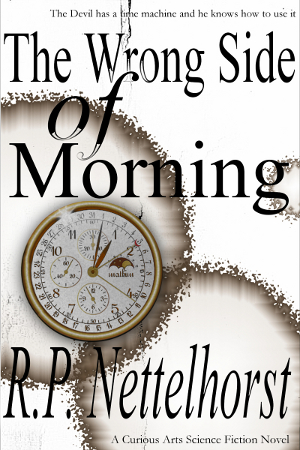
4. The Wrong Side of Morning
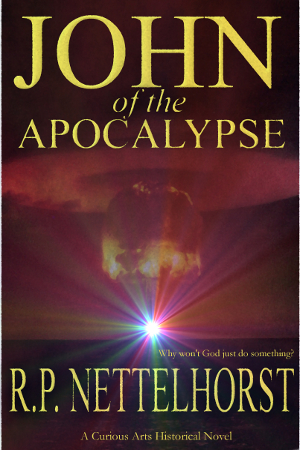
5. John of the Apocalypse
6. Chronicles of Tableland 1: All His Crooked Ways
7. Chronicles of Tableland 2: Twister
8. Chronicles of Tableland 3: Dark Waters
9. Chronicles of Tableland 4: Sail My Darling Lovely
10. Chronicles of Tableland 5: Behind the Wall
11. Chronicles of Tableland 6: Day Come
12. With a Rod of Iron
13. Darkness Warping
14. Clash Point
15. Narrow Gate

Click on any of the book titles above or below. That will take you to Amazon, where you can see a brief description of each book and even read the first few pages for free.

I also have 2 non-fiction eBooks for the Kindle or Kindle apps:

1. The Complaint of Jacob
2. What Would Satan Do? The Devil’s Theology

And then there are my traditionally published books available on Amazon and wherever books are sold. Two are hardbacks and two are paperbacks.

1. The Bible’s Most Fascinating People
2. The Bible: A Reader’s Guide
3. A Year with God
4. A Year with Jesus

Thus, a total of 21 books written by me are available to be purchased by anyone so inclined. Let all your friends know.

Send to Kindle
Posted in Writing | Leave a comment

Afterimage

It is odd what will trigger a memory. And even odder, sometimes, are the memories that are triggered. Every morning I have coffee. I have been having coffee for years, ever since I came back from my first summer trip to Israel following my Freshman year of college. I had spent my time there working on a kibbutz—a kind of communal farm—just south of the Sea of Galilee.

As I was pouring my cup of coffee one recent morning, an images from that trip replayed itself in my head. Why getting a cup of coffee that morning happened to trigger flashbacks, I’m not really sure. I’ve read that experiences such as déjà vu are the consequence of subtle cues flitting beneath our conscious awareness, particularly such things as odors, the way the light is hitting us at that moment, sounds, even our physical well-being. Maybe old memories get replayed for the same reason.

In any case, I suddenly re-experienced one of my first mornings on the kibbutz. In the mid 1970’s, Israel did not have a peace treaty with the nation of Jordan. The living areas of the kibbutz were ringed by high fences topped with razor wire, with guard towers, armed guards, and bright lights. The kibbutz was located along the Yarmuk River, right on Jordan’s border. I often worked in date fields where I could peer across the barbed wire fence and mine field that marked the frontier.

Every morning I was awakened for work at about 3:30 AM by one of the guards, armed with either an Uzi or an M-16. Of course, most of the people on the kibbutz carried automatic weapons. And they were well trained professionals, given that every man and woman above the age of 18 had spent four years on active duty in the Israeli army and were in the reserves until they hit 65. Every man and woman I met on the kibbutz had fought in the Six Day War and the Yom Kippur War.

After awakening, I, along with a bunch of other college students, would wander out of the dorms, down the path to the hut—a sort of shed where we volunteer workers assembled to await being picked up for transport to the fields. In the hut, there were always boxes of cookies—the sort that come in those round tins at Christmas time here in the United States. There were also several handleless Pyrex cups and a teapot. We’d scoop espresso ground coffee into the cups and then pour boiling water over the grounds and stir. After waiting a minute or two for the grounds to settle, we could drink the resulting coffee. There was always creamer and sugar that we could add if we were so inclined.

I vividly remember the rough gray wood of the bench on which the coffee and cookies rested, the strong smell of the freshly made and horrendously strong coffee, and the look of the mud-like sludge left on the bottom of the cups after we drank the coffee.

Afterwards, we clambered onto the flatbed trailers hitched to the back of a blue Ford tractor. It’s engine grumbled and snorted . The trailer bounced and swayed while we clung tightly to keep from sliding off. The air was filled with the stench of diesel, while overhead the sky had turned a brilliant blue, though the sun had not quite risen. Around us, the noisy squeal of birds, insects and other assorted beasts filled the air with an endless background thrum.

The other powerful memory of that long ago morning was the bone-weary exhaustion, the dull weariness that was never alleviated no matter how much coffee I drank. For eight weeks, six days a week, I did farm labor in 100 degree temperatures on an average of five hours sleep a night.

From that memory, my mind ricocheted to an overnight stay in Zurich, Switzerland, where, after an exhausting eight hour flight from New York in the middle of the night I arrived in a nearly empty airport shortly after sunrise on a Sunday morning. After speeding through customs, I boarded a bus that took me to a hotel somewhere near Lake Zurich, downtown.

Despite the overwhelming tiredness, knowing I had but twenty-four hours before I’d take a connecting flight to Tel Aviv, I quickly made my way out into the city, intent on sucking up as much of it as I could.

So many decades later, what I can re-experience in my mind are afterimages associated with strong smells: somehow I discovered an underground mall and wandered into the food court. Given that it was around lunch time, I ordered some food—specifically, what the tiny restaurant advertised as “American style Hamburgers.” Their smell was oddly spicy, with a strong hint of relish. It was undersized and overcooked, perhaps made of beef, and stuffed between some rounded, puffy bread that vaguely resembled a bun. I’m still not quite sure what the Swiss meant by “American style Hamburger.” Certainly it wasn’t the taste, which was nothing like any hamburger I’ve ever had before or since. Perhaps they meant simply that its appearance would remind you of a real hamburger if you turned off the lights and you squinted just right.

So why these memories on that particular morning not so very long ago? Perhaps it was simply the combination of the coffee I poured and the fatigue I felt on a Monday after not quite enough sleep.

Send to Kindle
Posted in History | Leave a comment